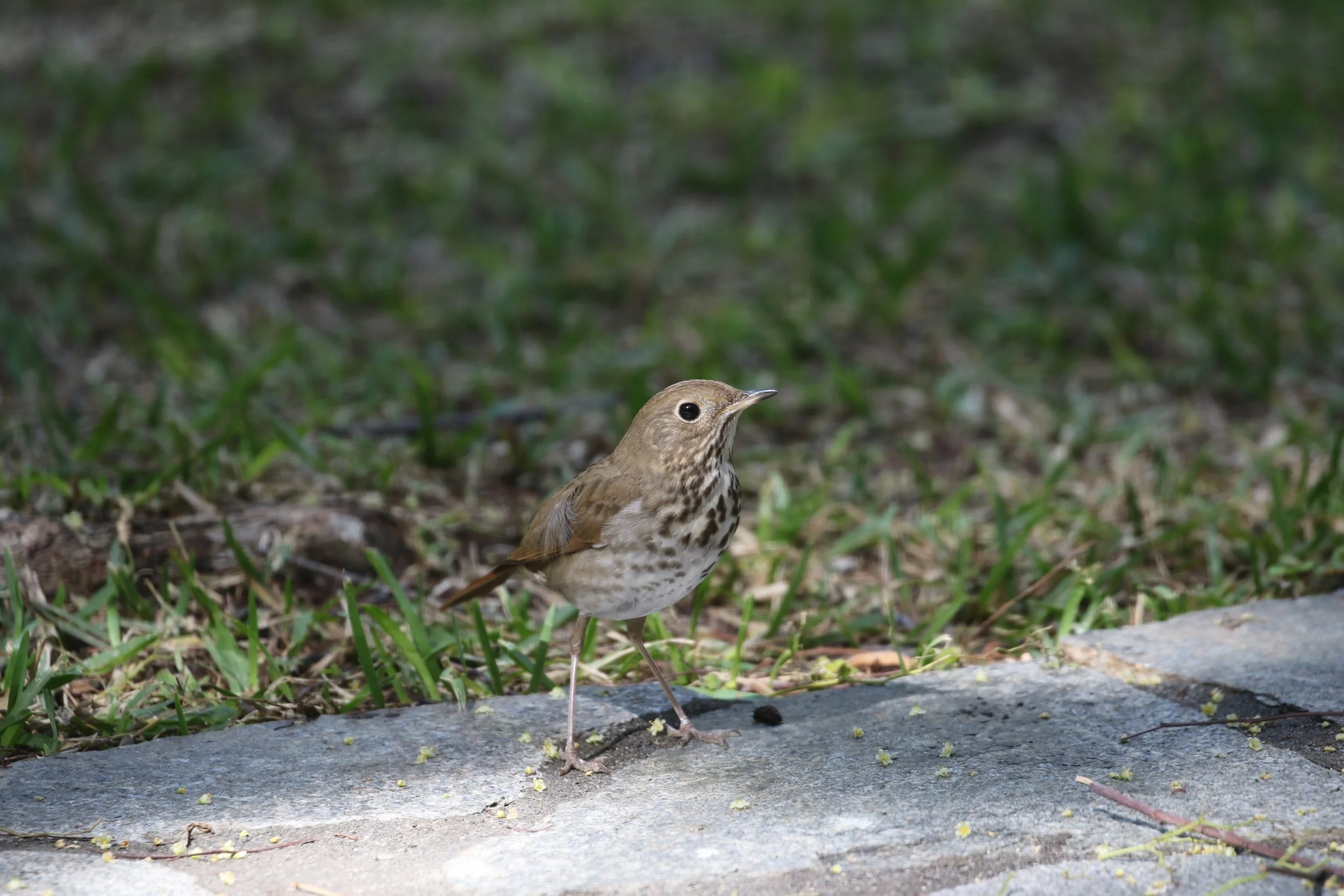
Hermit Thrush: Echoing Nature
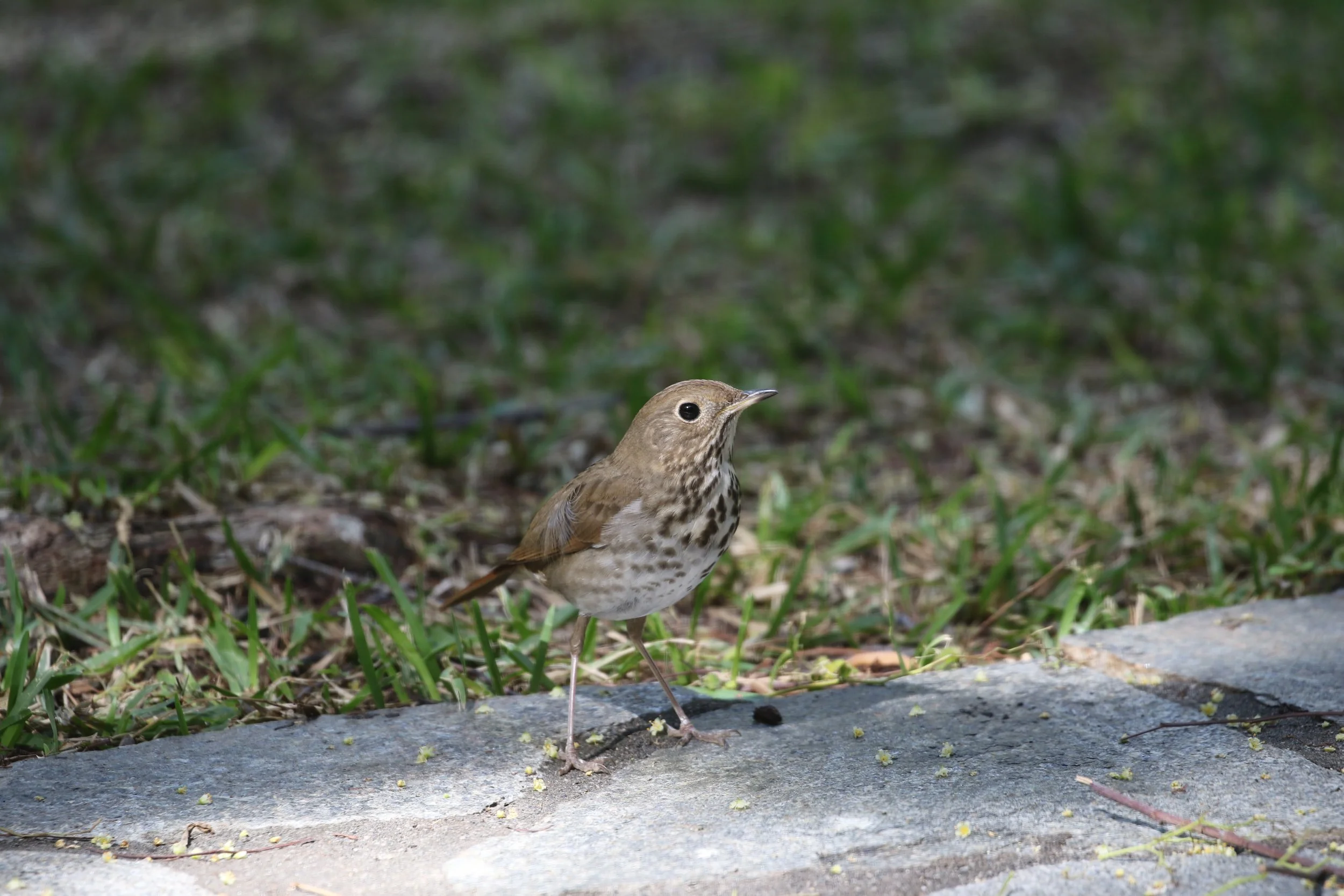
While searching far and wide for creative inspiration can yield interesting results in interior design, sometimes the most meaningful inspiration is closer to home, right in the garden. When it comes to nature-inspired design, the backbone principle of biophilic design, where interiors strive to replicate the calm found outdoors, it can be helpful to be patient when observing nature, allowing the beauty to reveal itself organically.
The Hermit Thrush, a small bird with powerful musicality, can offer such inspiration, both in its physical appearance and how its lilting, lovely song is often heard before the bird is seen, dialing into multi-sensory awareness, another principle of biophilic design.
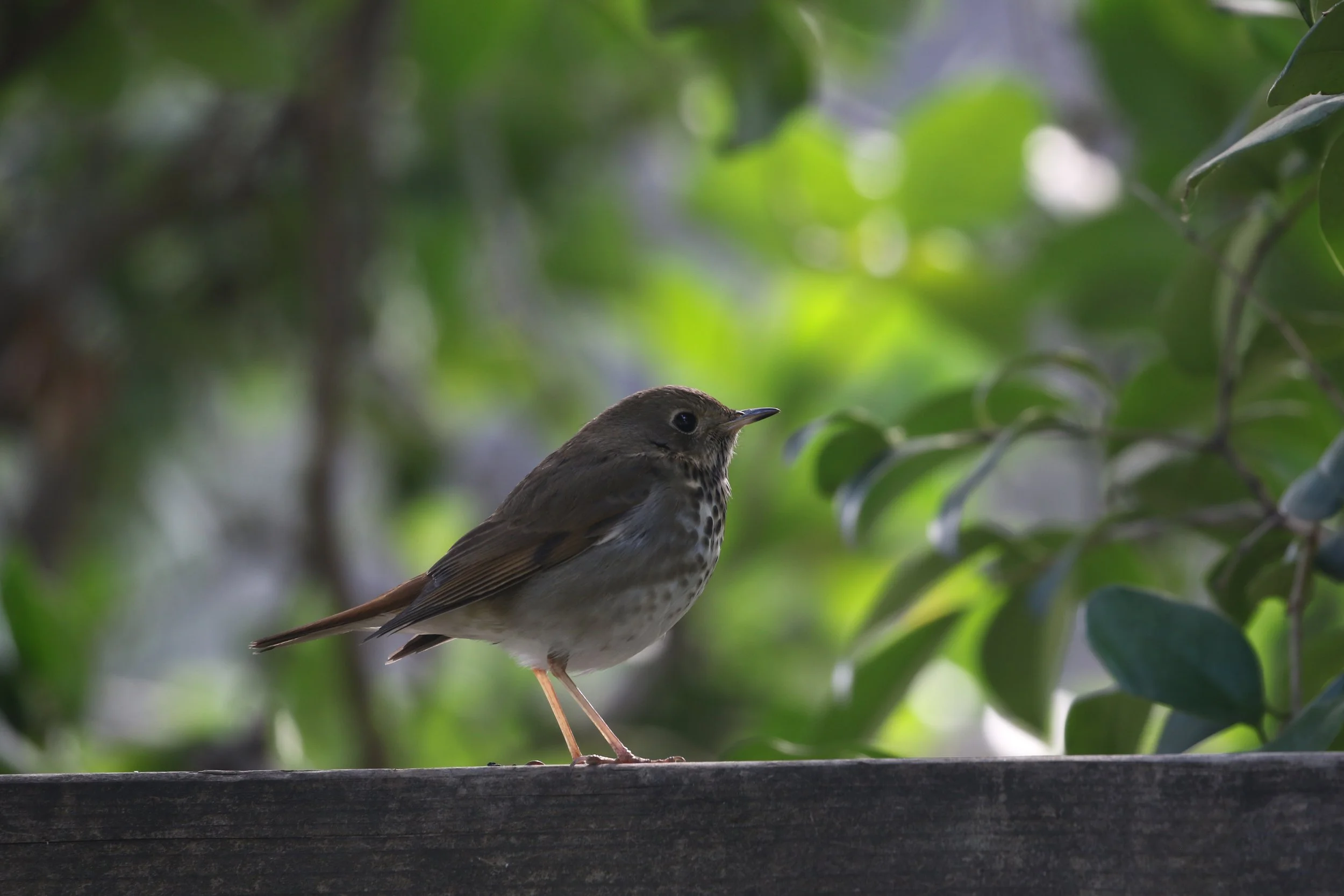
“The Hermit Thrush is one of the most beautiful birds to ever visit my garden,” says WELL and LEED-accredited interior designer Sarah Barnard, “It has long, graceful legs and a round chest with the most elegant patterning,” similar to a California Quail or scaly-breasted munia, also among her favorite birds.
It is a migrating bird, so chance encounters are elevated by the rarity. “The Hermit Thrush is a migrating visitor (to California), and so it's a wonderfully special time when they appear for the first time each year,” says Barnard.
It’s a small bird, generally about six to seven inches high, with a rich brown body and wings that flutter in flight. It likes forested areas primarily, and often lingers in dense underbrush or on the forest floor to forage for food. During feeding, it sometimes uses ‘foot quivering’ where its foot hovers over the ground and shakes grass and plant matter out for insects and other food.
The Hermit Thrush often broadcasts its flute-like song from concealed perches, demonstrating how nature encourages the viewer to be present and to open the senses to experience. It also underscores how subtlety can be more attention-getting than making a commotion.
Symbolically, the hermit thrush represents stillness. Some find the bird spiritual.
Its song is described by experts as haunting, lyrical, and melancholy, tinged with longing, which makes sense in the context of the legend associated with the small bird.
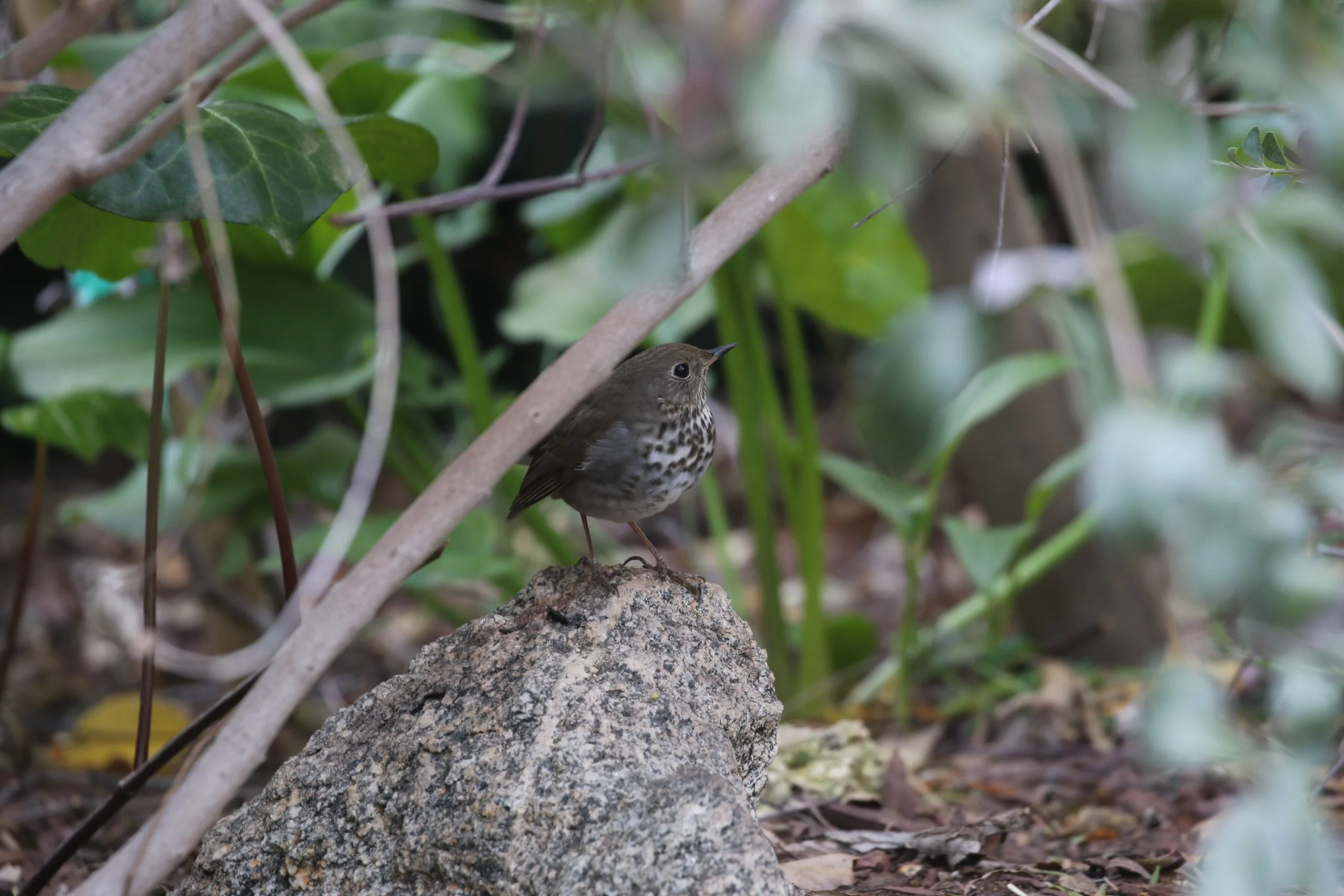
The Legend of The Hermit Thrush
The bird’s backstory, The Sacred Song of the Hermit Thrush, is a Native American legend describing how birds got their songs, with hidden lessons about honesty, often passed from parents and elders to children, during teachable moments.
The story goes that long ago, birds had no songs. The Great Spirit had decided to bestow birds with song and staged a competition among birds to see who would win the gift of song by flying the highest. The Hermit Thrush, tiny compared to many of the other birds, was worried it would not be able to compete. It hid in the feathers of a large eagle, ultimately winning the contest dishonestly. Winning came at an emotional cost, though.
The Hermit Thrush was ashamed and flew deep into the forest to remain hidden in a self-imposed exile, although its song can be heard from a distance: beautiful, introspective, and slightly melancholy, expressing regret.
The legend says that the Hermit Thrush remains there in hiding, but when it sings, the power and beauty of the song is so strong that all other creatures stop to listen.
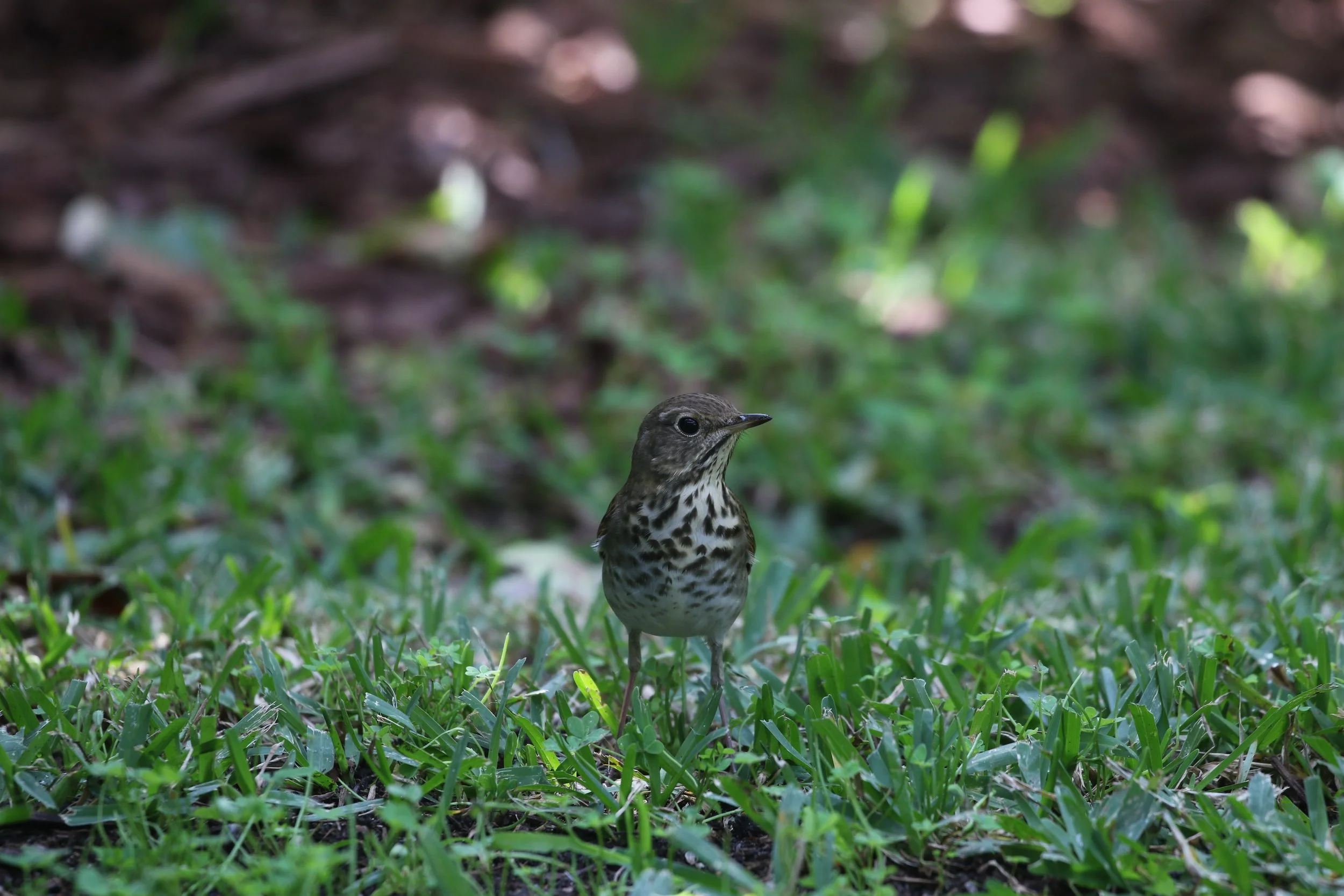
How the Hermit Thrush and Its Behaviors Influence Biophilic Design
The Hermit Thrush can serve as biophilic-influenced inspiration on a couple of levels. First, its rich coloring, elegant details, and textured feathers can be striking when physically replicated or reproduced on patterns, textiles, and other housing goods.
Second, turning inwards and considering some of the behaviors and patient perspectives of the tiny, often hidden, bird, and its nuanced interactions with its natural surroundings can serve as a foundation to try to bring calm.
The Hermit Thrush listens first, before echoing in song into nature. And in today’s digital-first, frenetic world, having the restraint to listen first, speak later is a skill not to be underestimated. Incorporating biophilic design elements, like those inspired by the Hermit Thrush’s habits, can help create a setting in which to be present and intentional.
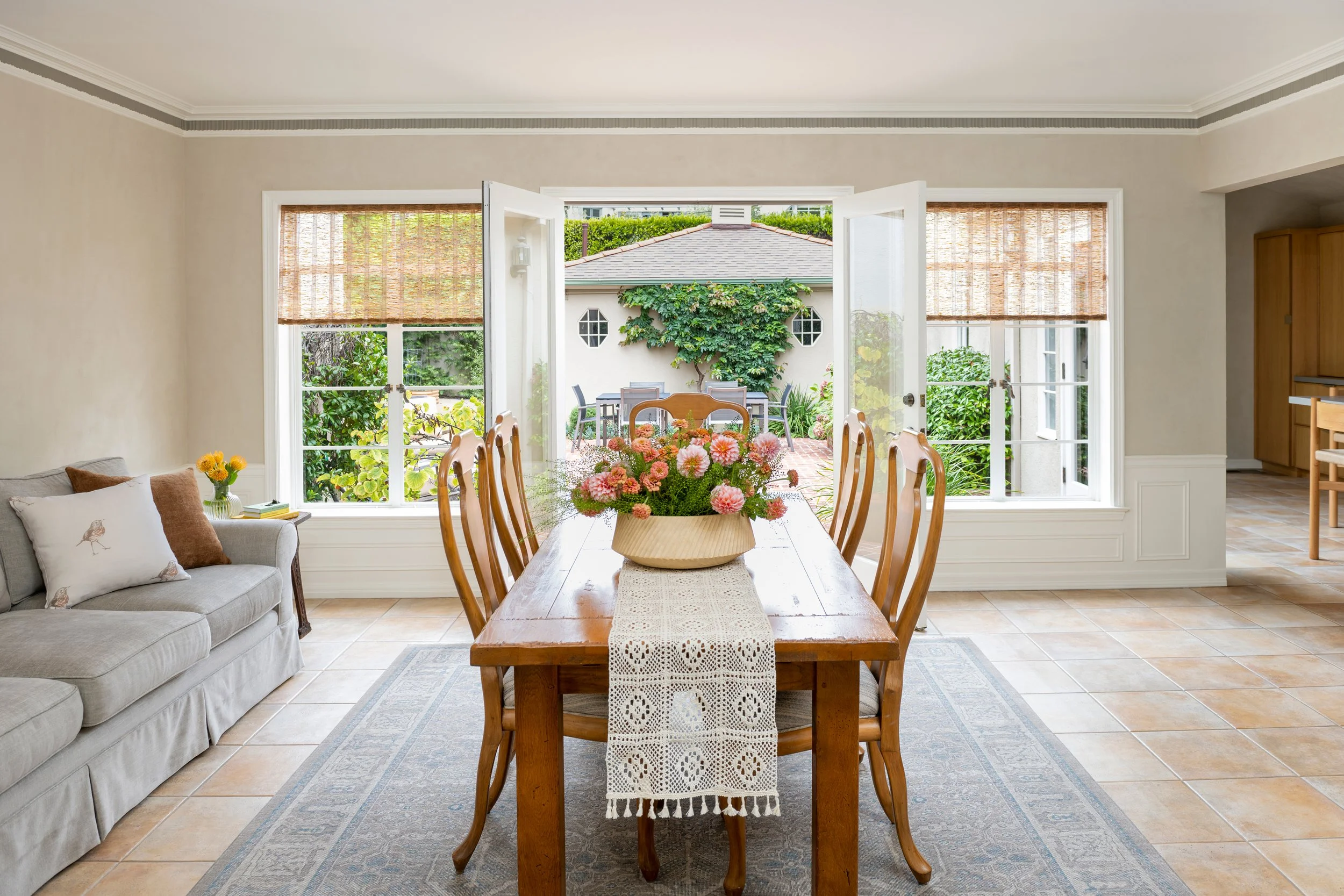
Here are some examples:
Follow the Cues of Nature
The Hermit Thrush is known for its patience and symbiotic awareness of its surroundings, which ultimately makes its song so powerful and calming. It uses its surroundings to be prominent, rather than competing with them.
In design, an option to replicate this is to follow the cues of nature organically. Instead of creating large focal points, let nature guide the eye and the design, using the path of light throughout the day for visual variety. Make transitions between spaces subtle, and use colors and material selections that mirror those seen in the local landscape, so the inside feels immersed in the outdoors.
Use the Refuge/Prospect Dynamic
Another principle of biophilic design is the refuge/prospect dynamic. The idea is to strike a balance between safety (shelter) and opportunity (in nature, this may include foraging for food, or similar). The Hermit Thrush is known for singing from concealed spaces, so an option to create that sense of safety is to leverage design elements in interior design, such as with a cozy reading nook, nestled in a corner, with a view to the outside, varying ceiling heights, to promote awareness of space, but with concept of shelter overhead, a window seat, or a covered porch.
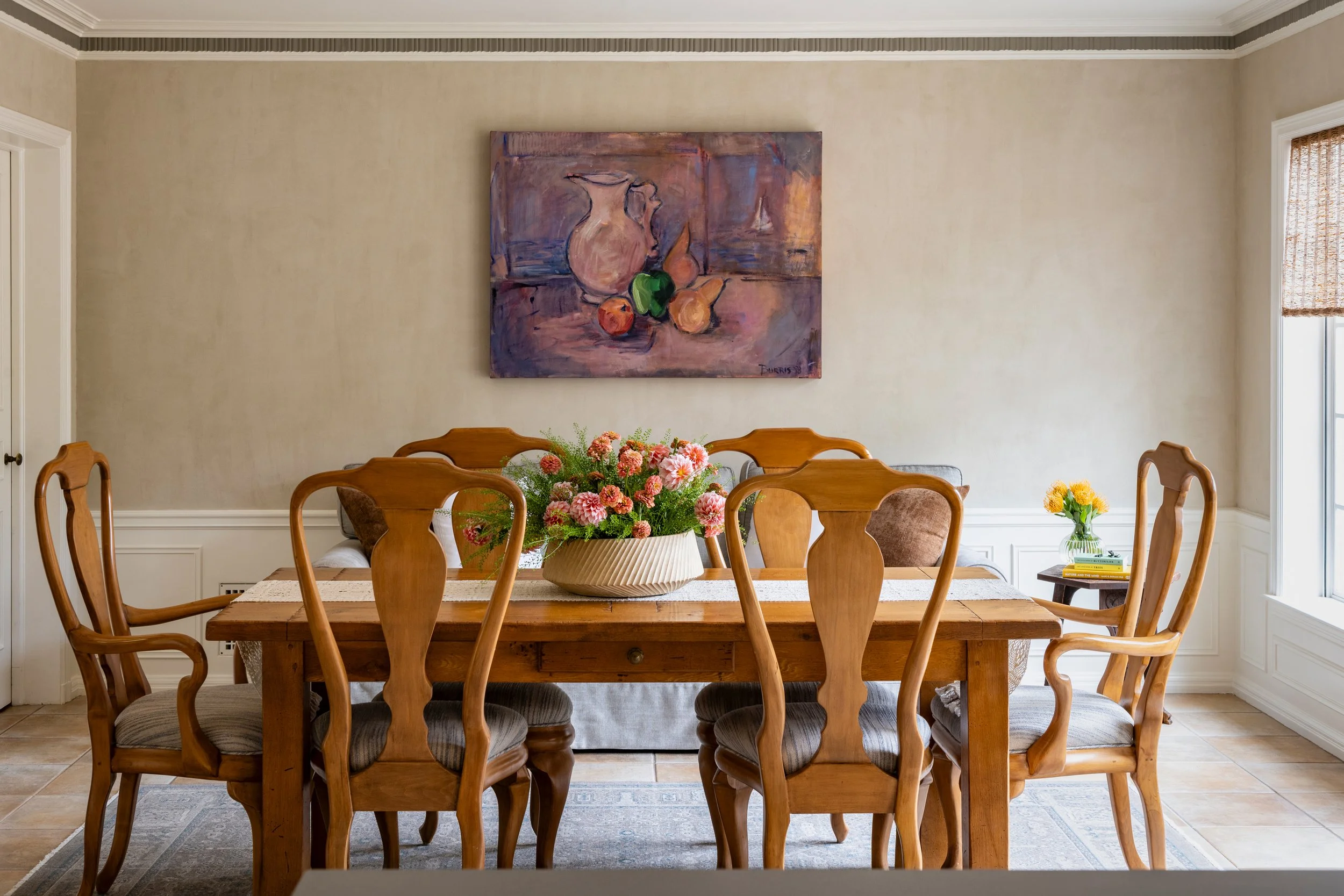
Create Space for Stillness
The Hermit Thrush is known for stillness. Create space at home that can promote stillness, presence, and calm. Use calming color palettes, and embrace a digital-free space, where there are no screens, or screens and other tech are concealed. Consider textiles and other decor that absorb sound to allow for quiet. Comfortable furniture can encourage lingering, while having cues for intention, such as having painting, or journaling materials at hand, can encourage calm.
What all of these design elements, and the habits of the Hermit Thrush demonstrate is that there is inspiration readily available all around; it is often a question of being still, aware, and open to the possibility.
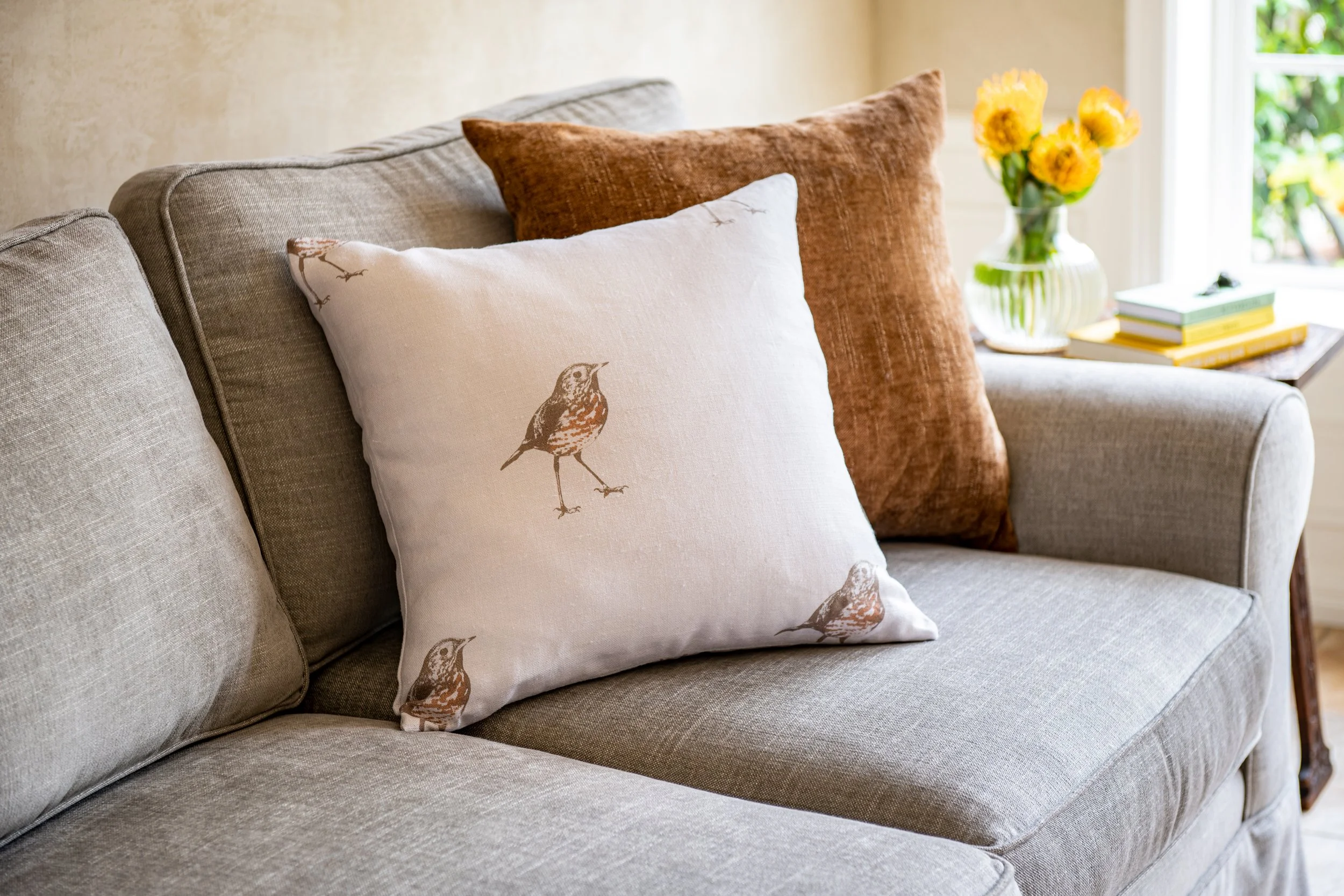
The Hermit Thrush textile in Belgian Linen and organic cotton sateen will be available on the Kale Tree site soon in four colorways! Hermit Thrush is also soon to be available in unpasted wallpaper. For urgent orders, or custom colorways, please contact the studio directly.
Sources:
https://www.allaboutbirds.org/guide/Hermit_Thrush/overview
https://www.audubon.org/field-guide/bird/hermit-thrush
https://www.oneidaindiannation.com/the-legend-of-the-hermit-thrush/
California Style Holiday Gifts
Give gifts intentionally and sustainably this holiday season by choosing nature-inspired goods from Kale Tree. Use our beautifully biophilic textiles to customize special gifts, or choose from a selection of goods that can help infuse a home with warmth and serenity.
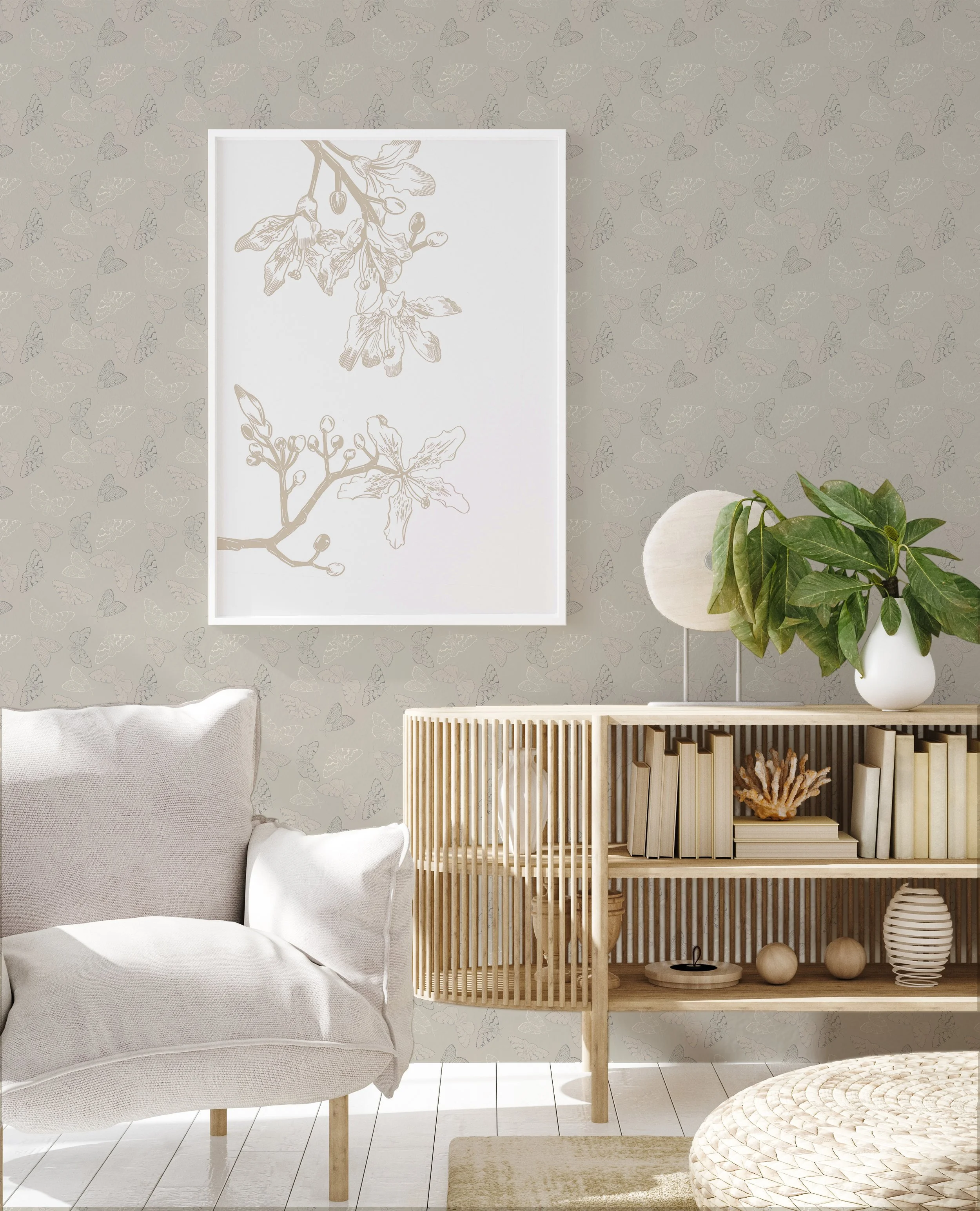
Moth Wallpaper
Butterflies represent transformation and hope, a symbolism that is particularly understood by butterfly enthusiasts and lepidopterists, who would find a gift of moth-motif wallpaper meaningful and beautiful. Light-hearted and lovely, in neutral creams and toasted gray scallops, the pattern is hand-drawn, inspired by moths fluttering at dusk.
This eco-friendly wallpaper is printed in the United States on FSC-certified paper, is PVC-free, and features subtle surface texture.
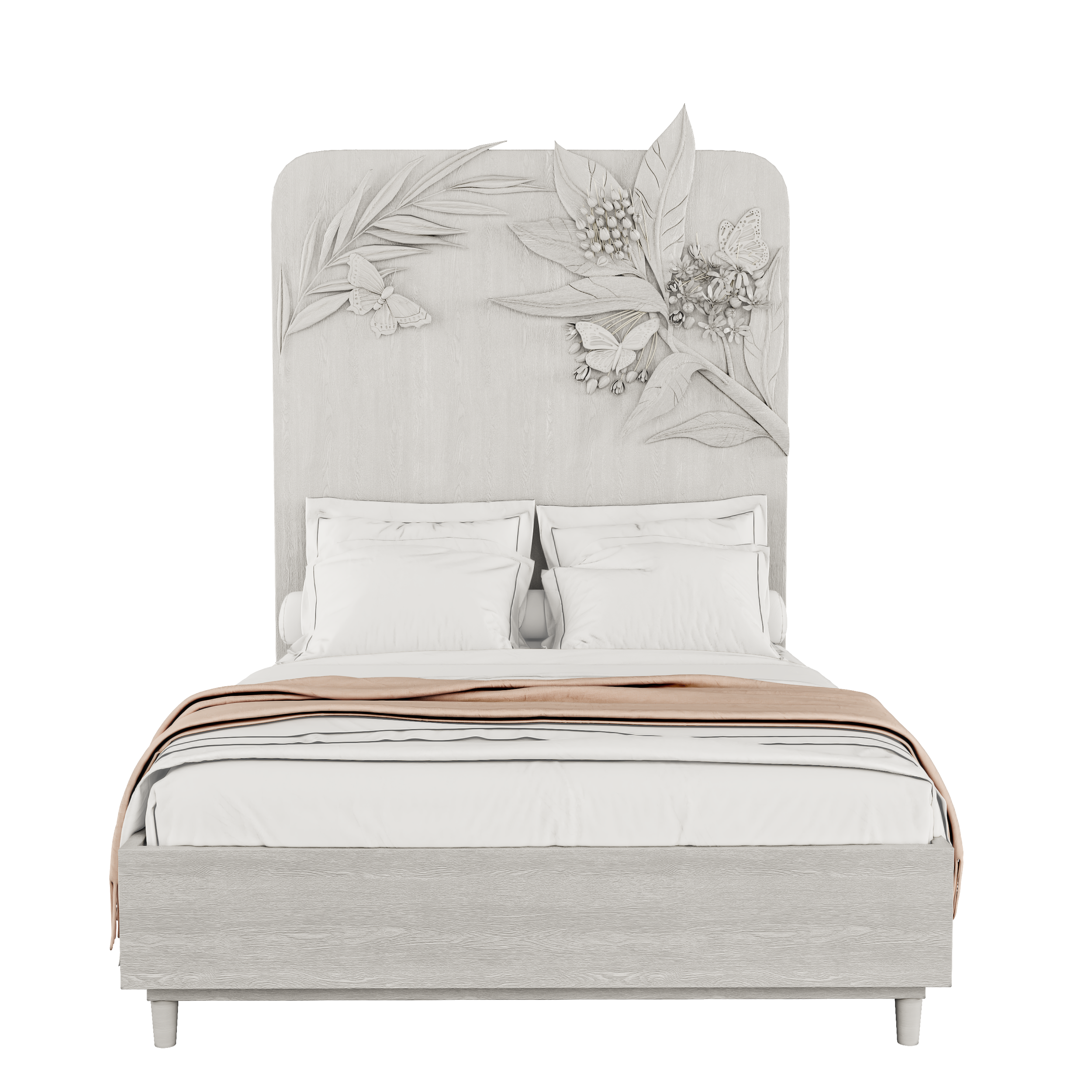
Butterfly Dreams Bed
In keeping with the butterfly theme, a bed styled with the ethereal beauty of butterflies can instill calm for serene, sweet dreams. Butterflies are prominent in biophilic design, elements of which are proven to have positive effects on mental and physical health.
The butterfly dreams bed is hand-carved from sustainable hardwoods and comes in either non-VOC paint or stain options for finishes.
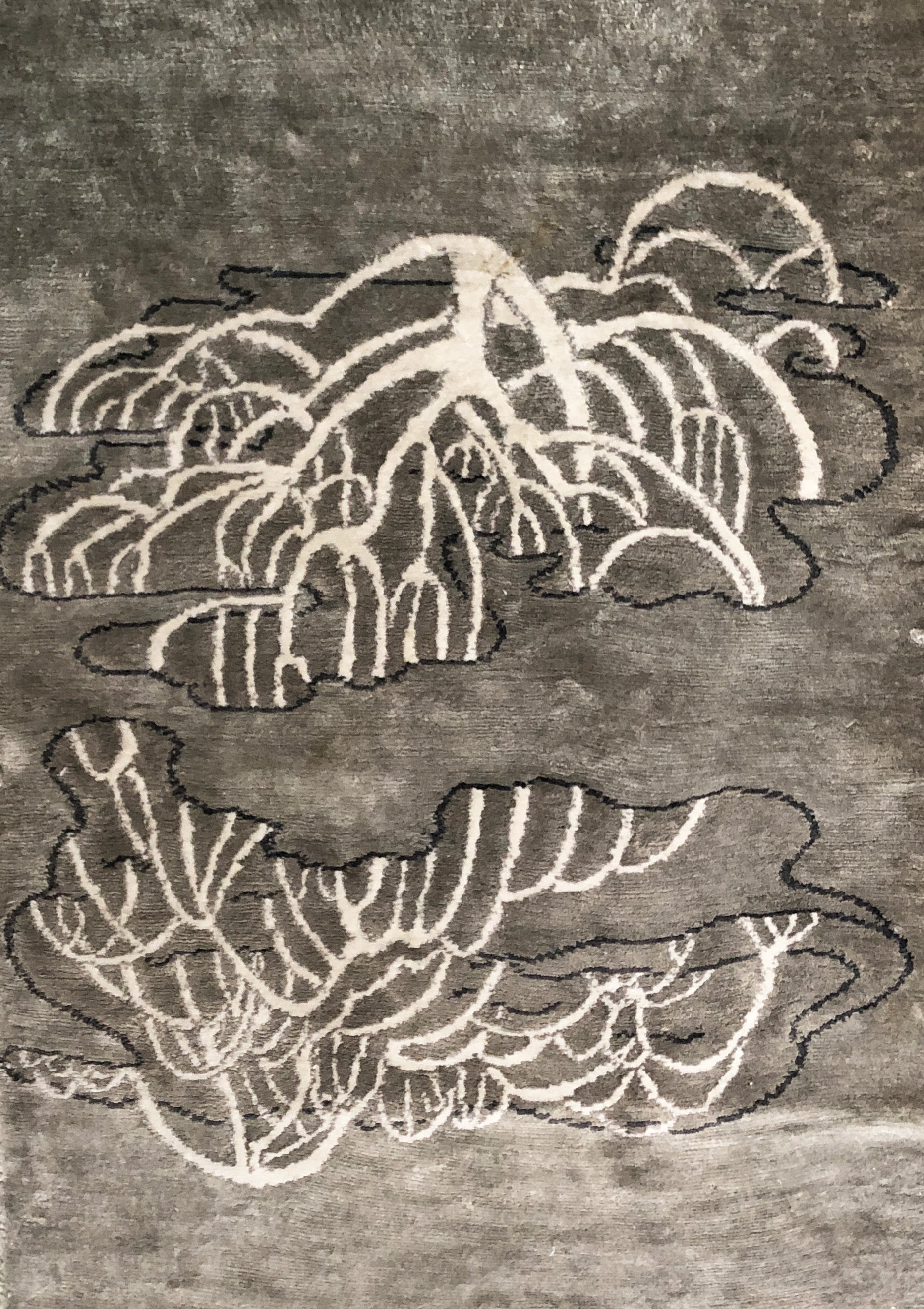
Mangrove Rug
For the environmentalist on your list, consider a stylish and comfortable mangrove rug. In addition to being naturally elegant, mangroves are known for their quiet resilience and adaptability to various environments, which only enhances their beauty. They endure harsh conditions and contribute protectively to local ecosystems. How inspiring to have these qualities underfoot on a rug, an energizing foundation for each day?
Each rug is handmade to order, from vegan bamboo silk or New Zealand wool, with a percentage of each sale donated to the Mangrove Action Project.

Cholla Tote
This tote features a pen-and-ink illustration inspired by the cholla cactus, which grows primarily in desert regions in the Southwest United States and Northern Mexico. The cholla’s barbed spines are sculptural and play an important role in the beauty of the desert landscape, and in supporting the local ecosystems.
This in-demand tote is limited edition and has a limited supply, so order soon. With fabric straps and an open main compartment, it’s useful as a sustainable, multi-purpose bag for errands. Also, its design and style are well-suited for people with specific requirements, such as interior designers to carry samples, or for artists and hobbyists to carry supplies.

Gingko Light Fixture
This indoor/outdoor light fixture has delicate cast bronze details, replicating the fans of gingko leaves. The ginkgo has long historical roots, dating back millions of years. Its resilience is substantial, adapting throughout various climate events over the centuries. It’s a symbol of strength and healing, and can help deliver the warmth of nature-inspired design.
The light fixture is available in various sizes, has a milk white globe, and has dimmable LED lighting.

Matilija Poppy Textiles
Gardening with plants native to California can yield uniquely beautiful landscapes. The Matilija poppy is a dramatic, eye-catching wildflower local to California, known for its lacy petals and fluffy, colorful centers.
These hand-drawn textiles, inspired by Matilija poppy superblooms, are printed with eco-friendly, water-based inks on fine Belgian linen. These textiles can be customized into a variety of goods, from drapery to bed linens, and more, perfect for gardening enthusiasts, to infuse the quiet beauty of the Matilija poppy into their homes.
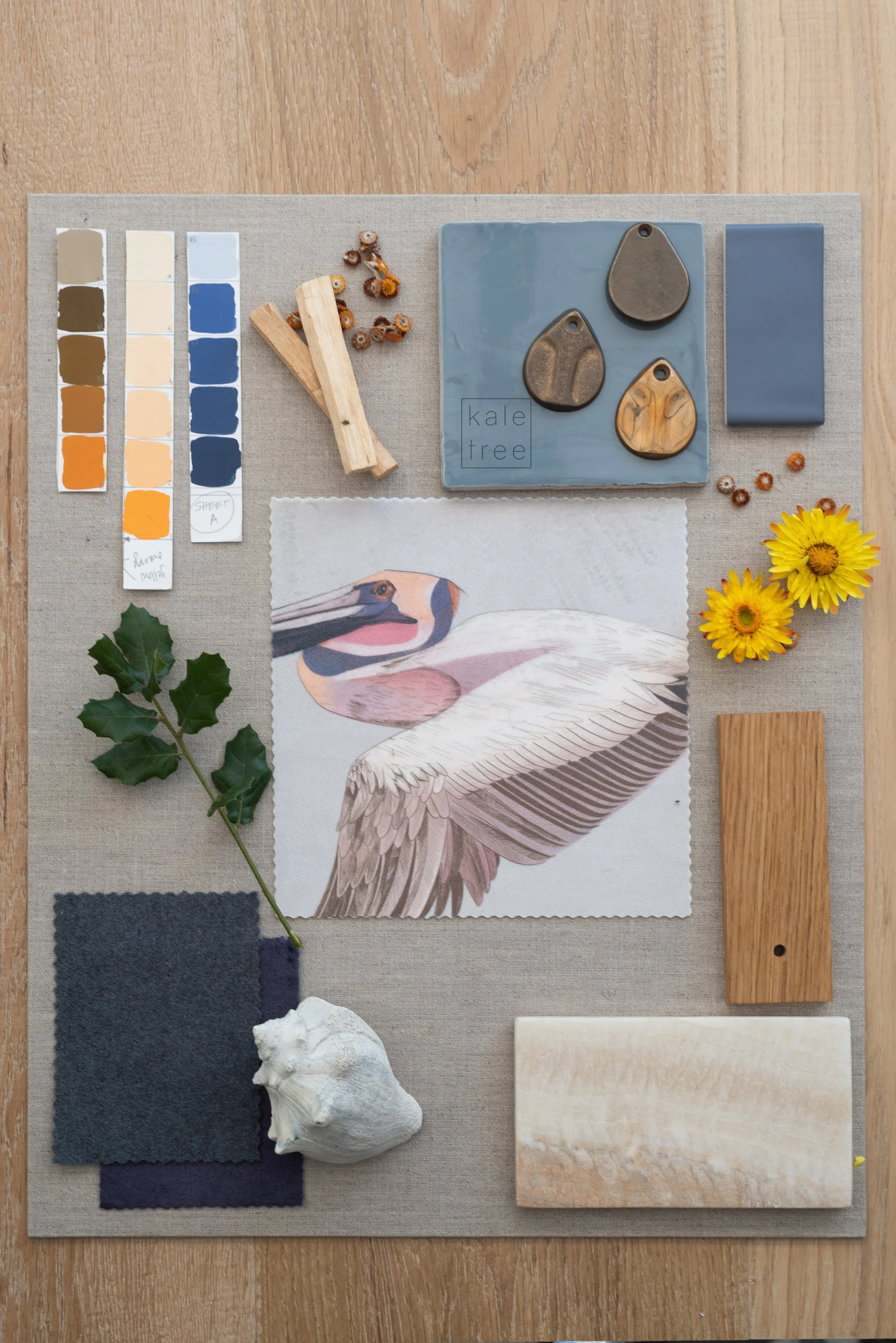
California Brown Pelican + Home Decor
California has long been defined by its coastline, which attracts many people and wildlife to the region. The distinctive conditions along the coast support a diverse ecosystem unique to the area, where many animals can be found in few other places. One of these beloved animals is the California Brown Pelican, a beautiful bird that, much like its namesake state, bridges the gap between land and sea.
Do California brown pelicans live only in California?
While California Brown Pelicans can be found along the coasts of the Americas from Vancouver to Nayarit, Mexico, their breeding range is even more limited, with the only breeding colonies in the United States found in Southern California, within the Channel Islands.
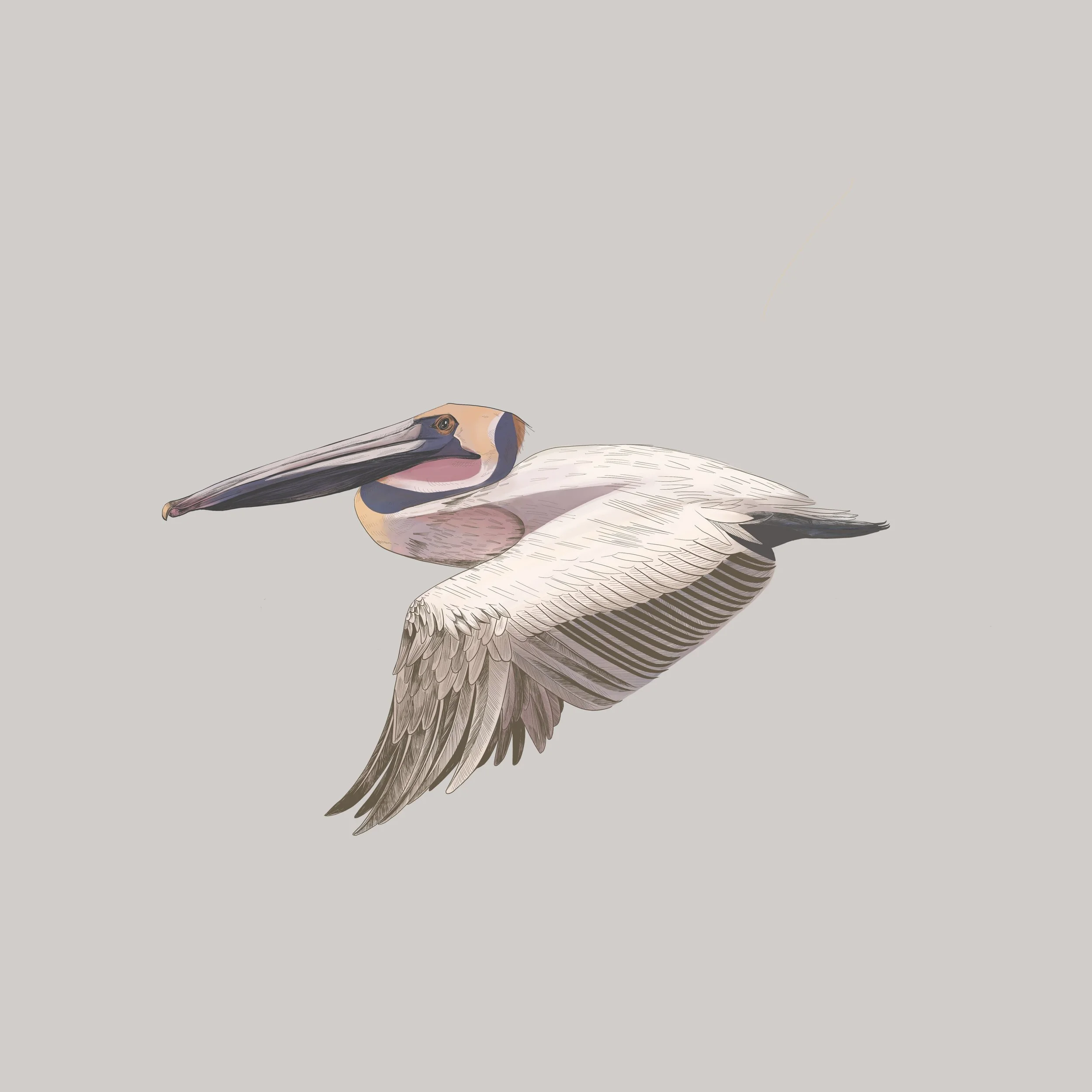
Why the California Brown Pelican?
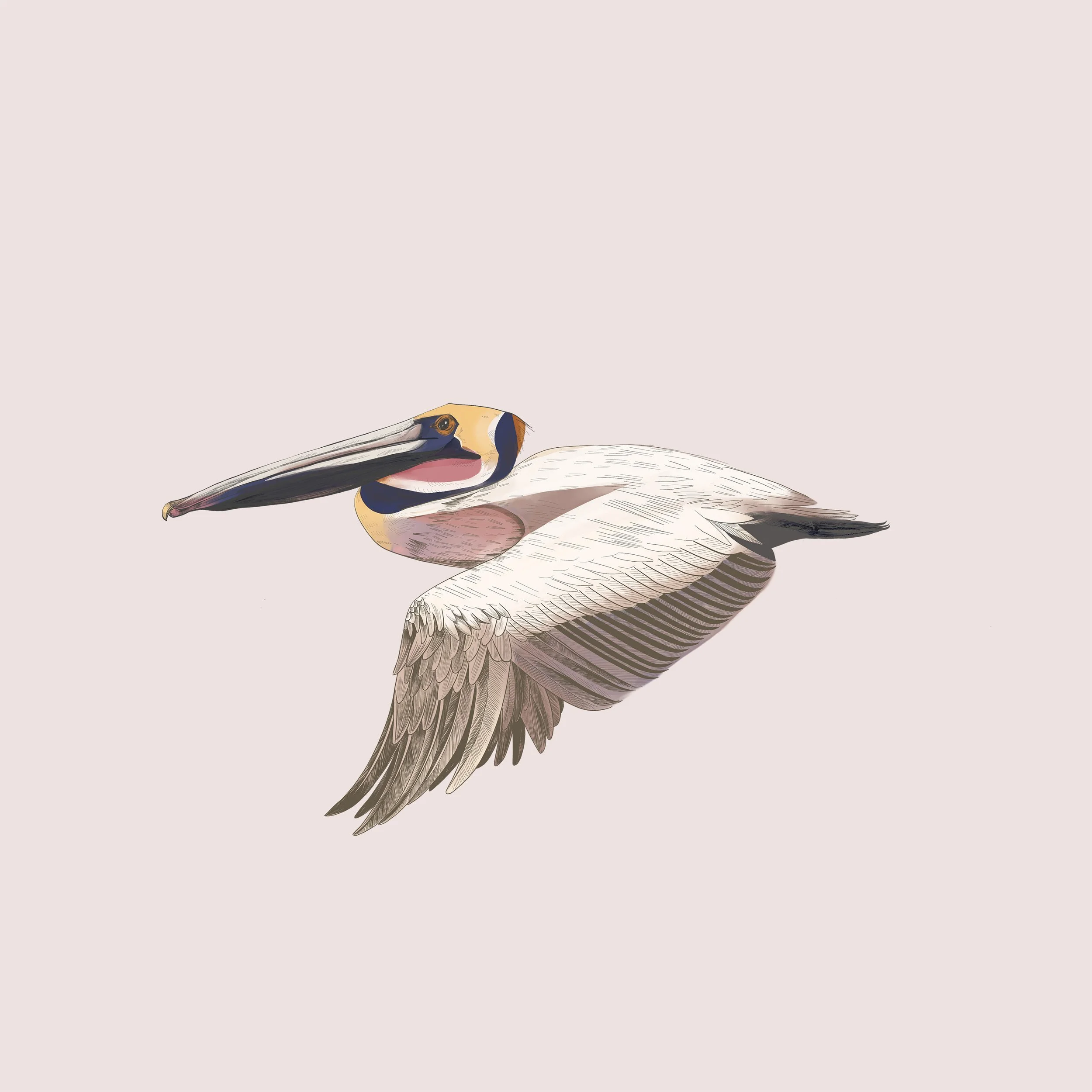
As Kale Tree looks to nature that inspires us, the California Brown Pelican strongly represents what we find so remarkable about California's nature and wildlife. Our love for the ocean, birds, and the unique qualities of Southern California's environment is reflected in the Pelican. Because its connection to Southern California is particularly tied to its breeding colonies, the Pelican in our textiles and wallcoverings wears the bright seasonal colors the California Brown Pelican dons during breeding season.
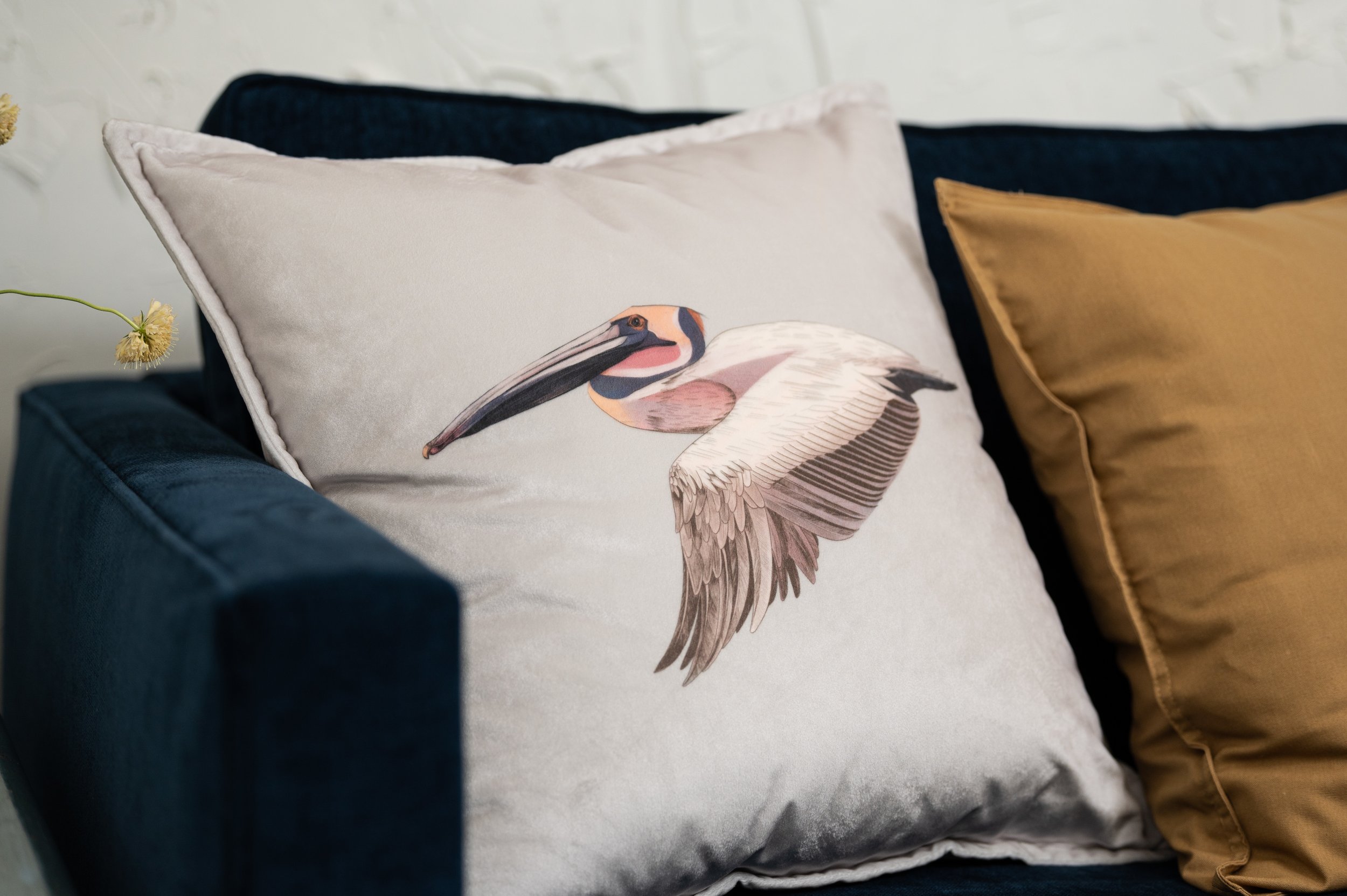
What are the colors of a California Brown Pelican?
While most of the year, the Pelican typically has a primarily brown body, during mating season, "the distal end of the bill turns reddish, the proximal end of the throat pouch brightens to a poppy-red, the iris turns a yellowish white to light blue, and a white stripe runs down the pouch side of the neck". These bright, beautiful color changes celebrate the unique characteristics of the Pelican that drew us to the bird, as well as the calm and wonder it inspires.
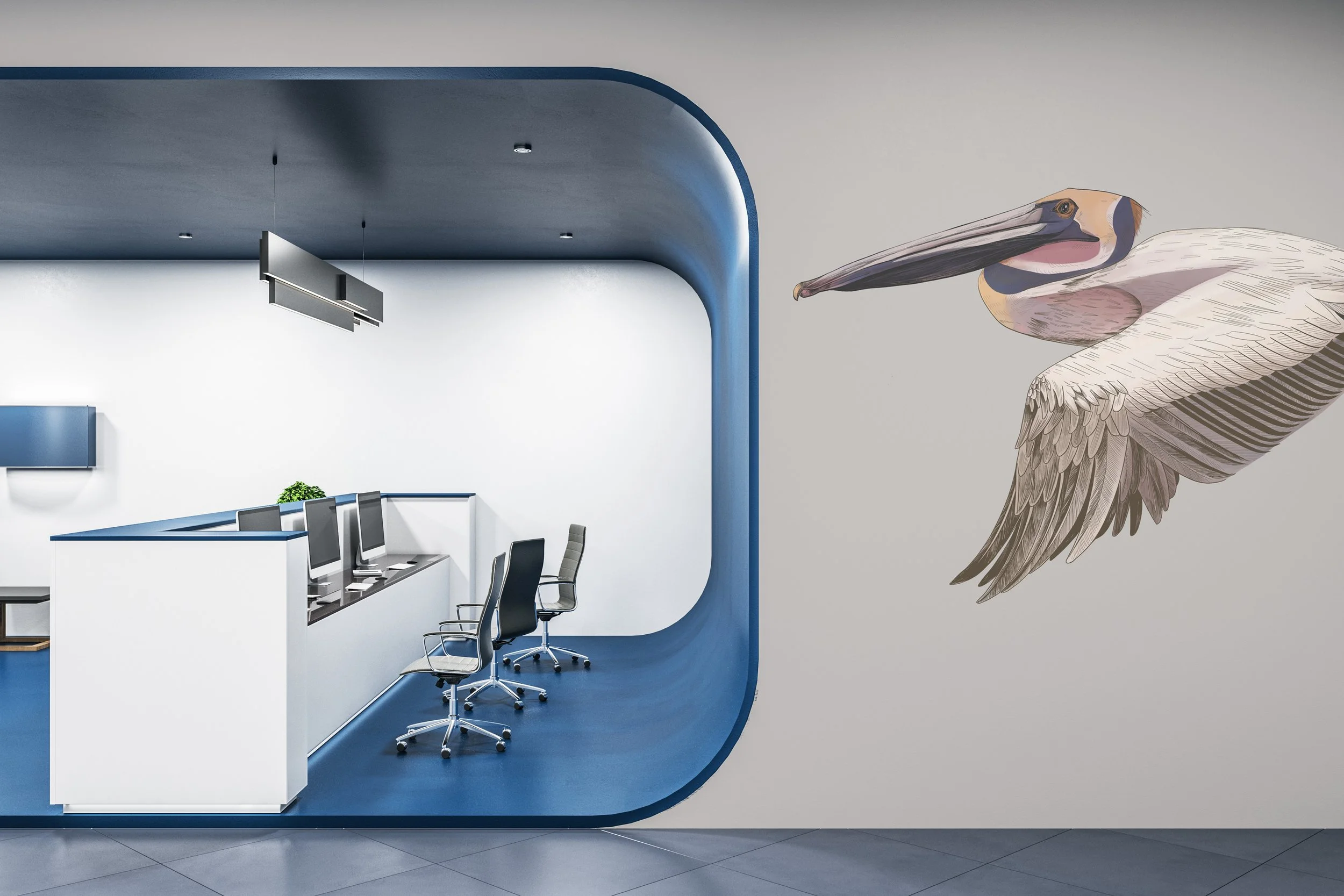
The Pelican art is featured on wallcoverings, Belgian linen, and velvet textiles, reflecting the sense of comfort and peace of being beachside and the exceptional nature of California.
Should I use linen or velvet for pillows, furniture, and draperies?
Kale Tree's Belgian linen and velvet textiles both make excellent options for pillows, upholstery, and draperies. Linen can often contribute to a lighter, more traditional coastal aesthetic. With draperies, linen can also let in more light than velvet, while velvet may be preferable for temperature control. Many may also enjoy the sumptuous tactile nature of velvet for pillows and upholstery.
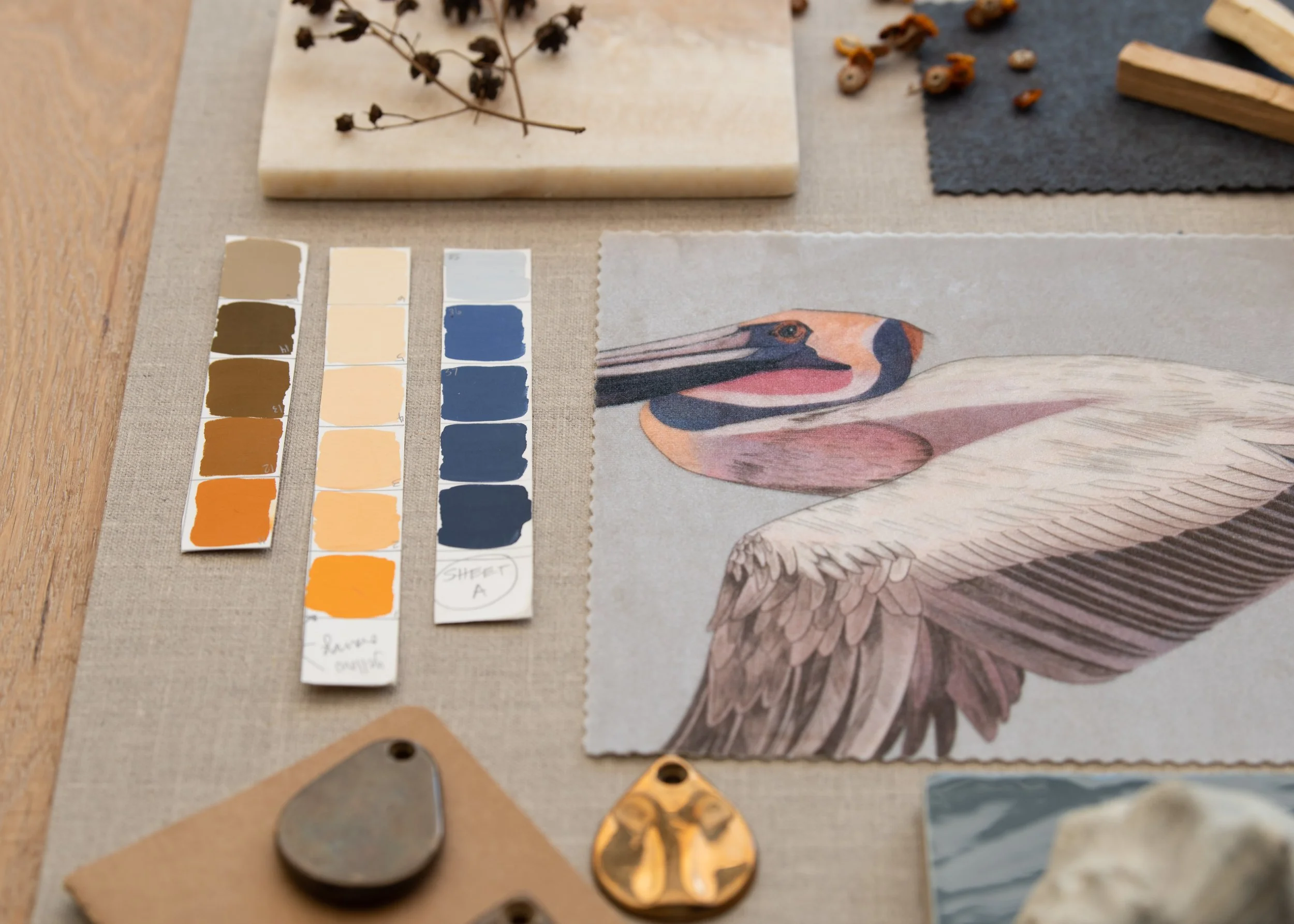
What are the best ways to decorate with bird motifs?
Bird motifs are excellent for creating visual interest and carrying or introducing color throughout a room. Bird motifs are wonderful when used on throw pillows or bedding, or to create a more dramatic statement on an accent chair or draperies. When used in a larger pattern, like wallcoverings, they can create movement that adds dynamism to a space. In the case of the pelican print, the larger swaths of pattern have a transportive quality, evoking the sight of a pod of pelicans flying above the ocean.
How can I decorate with coastal decor in the winter?
Coastal decor doesn't need to be limited to the summer months. Using softer, more neutral shades of beige or grey can take coastal themes beyond traditional beachy palettes and into more year-round aesthetics. Unexpected fabrics like velvet can add warmth and depth, making more coastal themes appropriate for year-round decor.
https://www.nps.gov/places/000/california-brown-pelican.htm
https://www.aquariumofpacific.org/reportcard/info/california_brown_pelican
Kale Tree Holiday Gift Guide
Give the gift of Biophilic design this holiday season with some of our favorite nature-inspired goods from Kale Tree.

Matilija Poppy Textile - Natural
The Matilija Poppy, a beautiful and unique California native wildflower, inspires this hand-drawn textile design from Kale Tree. This textile is printed on luxurious Belgian linen, ready to be transformed into an array of customized home goods like pillows, drapery, and bedding that will bring the joy of a Californian super bloom into the home of our gardening enthusiast friends and family.

The hand-drawn pattern of the Kale Tree Tree Moth rug is inspired by moths fluttering at dusk. This pattern seeks to add a quiet beauty to any room, a perfect gift for those who appreciate the subtle beauty of nature's pollinators. Each rug is handmade to order in either Vegan Bamboo Silk or 100% New Zealand Wool for a luxuriously soft feel underfoot. Available in 5 x 8, 8 x 10, or 9 x 12 to suit any home size.
Ginko Indoor Outdoor Light Fixture
The Ginko leaf is a symbol of peace, healing, and longevity that often appeared in the designs of the Art Nouveau and the Arts and Crafts movement. This beautiful Ginkgo indoor/outdoor light fixture made of cast bronze Ginko leaves cradling a milk glass globe is sure to be a treasured gift for those who appreciate the beauty of art and nature.

Give the gift of nature-inspired healing spaces with this eco-friendly wallcovering from Kale Tree, featuring a hand-drawn pattern inspired by Mallow blossoms. Commonly called Abutilon or Flowering Maple, this woody shrub is best loved for its delicate drooping blossoms. Available in 3 colorways (Midnight Forest, Evening Mauve, and Dusty Dawn), we love the soothing color of Dusty Dawn as it evokes the calm of dusk. This wallcovering is also PVC and VOC free, contributing to a healthy home environment.
The Cholla Tote is an excellent option for those looking for something special to include in this year's holiday stocking. This design is based on a pen and ink illustration of a Cholla cactus, native to northern Mexico and the Southwestern United States. Hand-printed on 100% certified organic cotton, this tote makes a beautiful yet practical gift.
This selection of bespoke nature-inspired goods helps connect our home interiors with the beauty and peace of the natural world. Give the gift of a mindful home this holiday season, exclusively available through the Kale Tree online store.
Sarah Barnard, WELL AP + LEED AP, is a leading designer of personalized, sustainable spaces that support mental, physical, and emotional wellbeing. She creates highly personalized, restorative spaces that are deeply connected to art and the preservation of the environment. An advocate for consciousness, inclusivity, and compassion in the creative process, Sarah has appeared in Architectural Digest, Elle Décor, Vogue, HGTV, and many other publications. In 2017 Sarah was honored as a “Ones to Watch” Scholar by the American Society of Interior Designers (ASID).
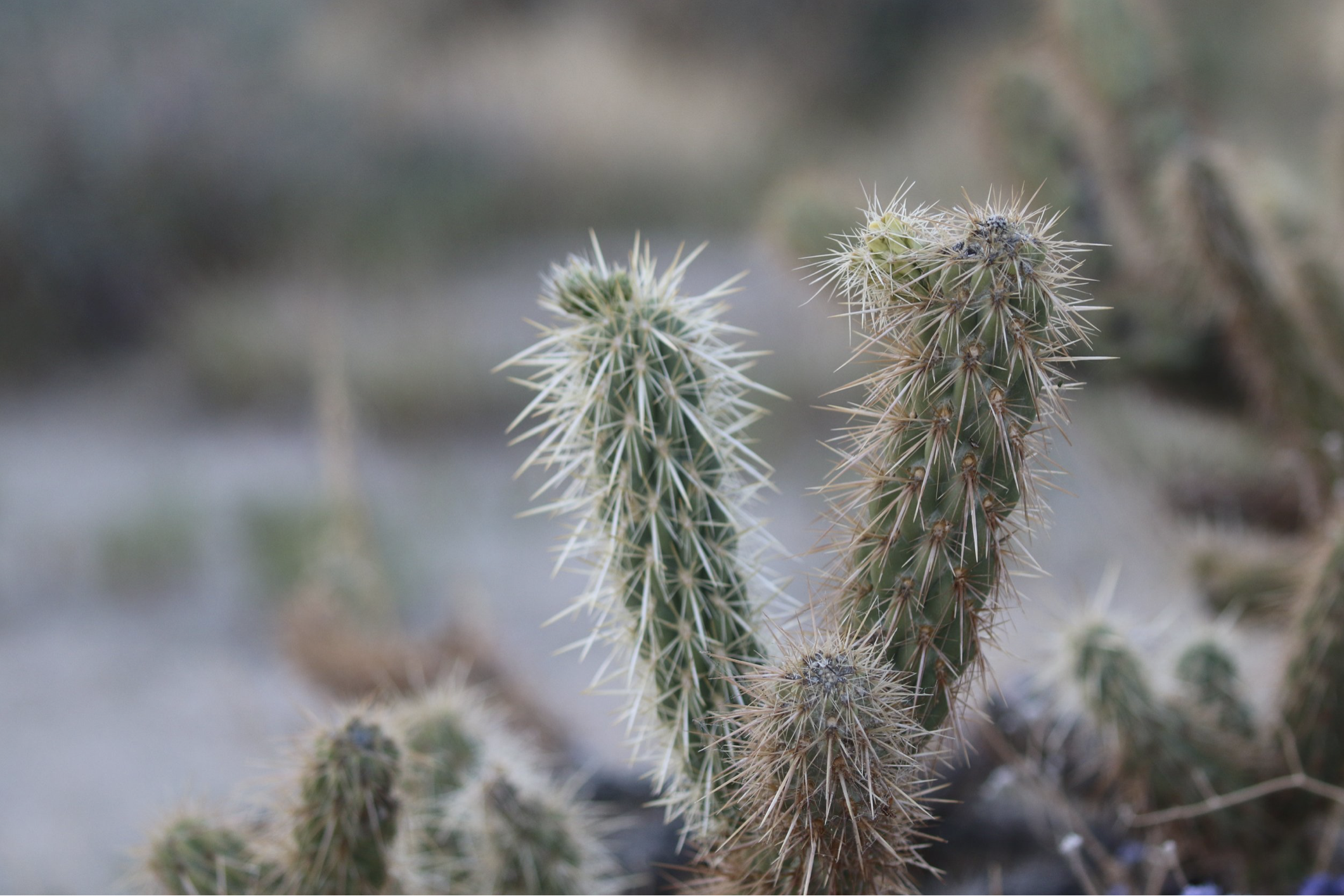
Desert Decor: The Unique Appeal of the Cholla Cactus
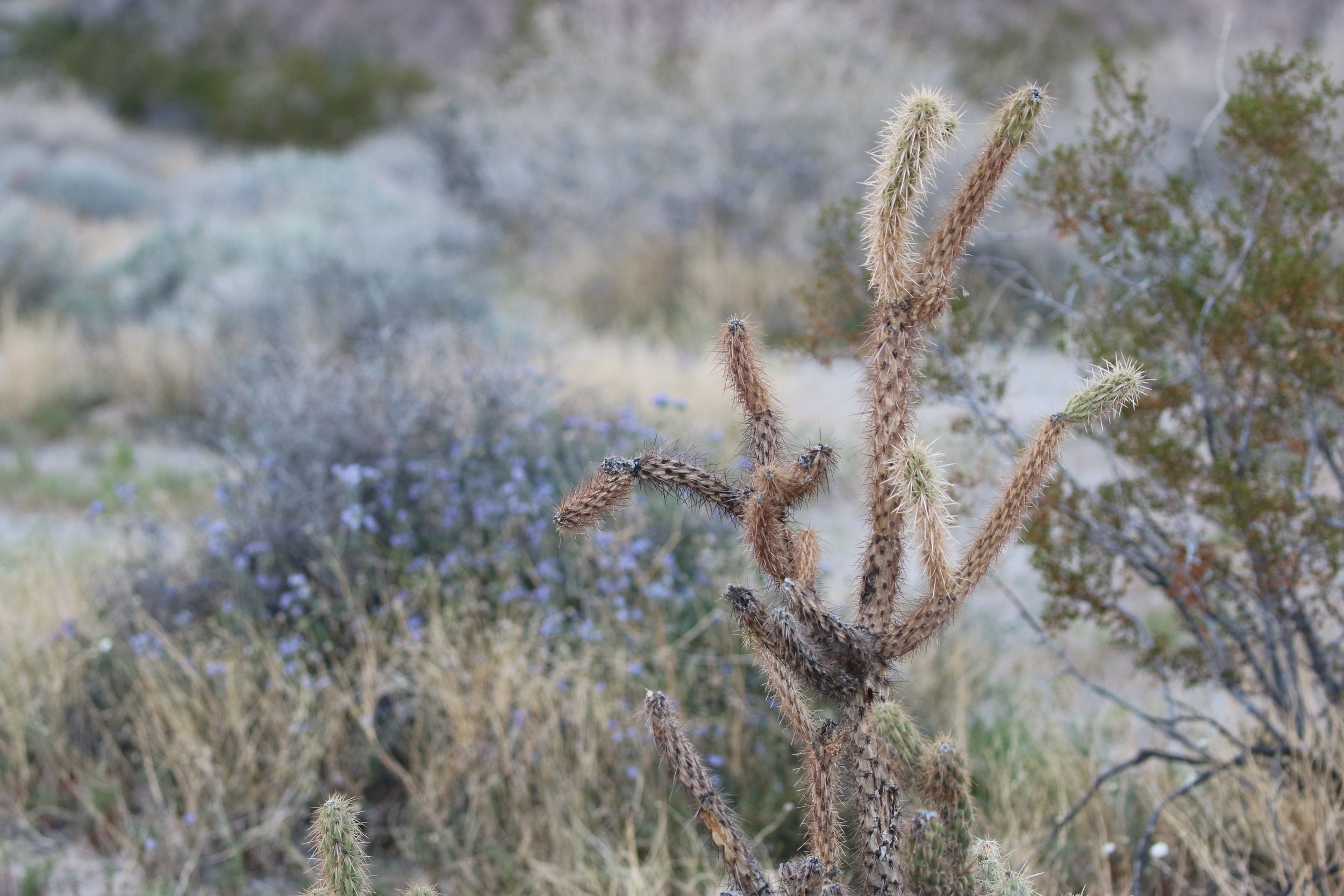
Cholla Cactus (Cylindropuntia) at Anza Borrego State Park
Southern California is known to house a wide range of natural environments, but none feel as quintessential to the landscape as its vast deserts. Many residents and visitors find solace in the state's desert environments, which host a rich variety of plant and animal life, and provide a stark contrast to more bustling urban city centers. Iconic to these landscapes are the wide variety of succulents and cacti, including the diversity of cholla cacti featured in many state deserts. The most notable collection may be the cholla cactus garden in Joshua tree. However, the plant is interspersed in many desert landscapes, including the shrubbery of Red Rock Canyon and the Mojave Desert.
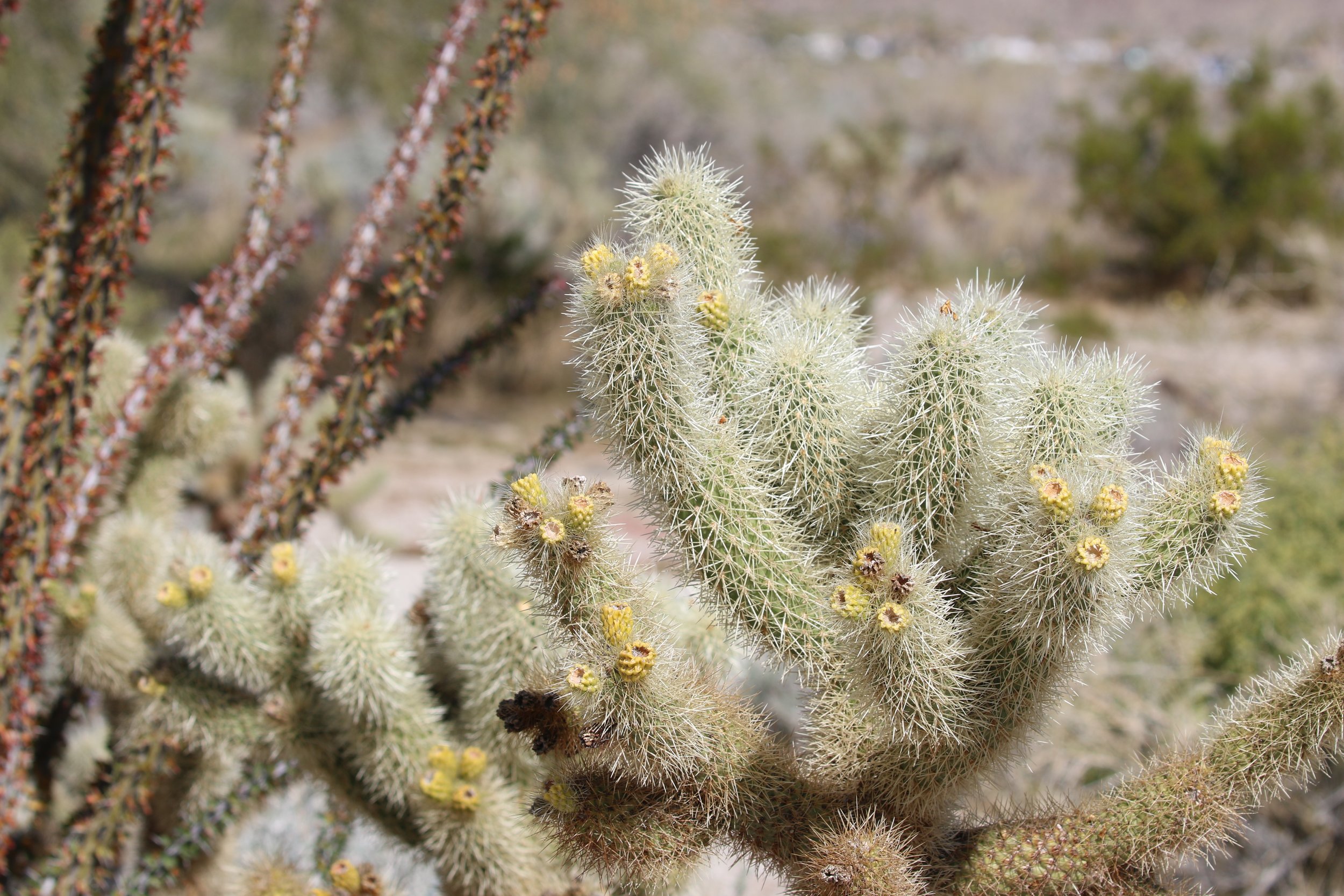
Cholla Cactus (Cylindropuntia) at Anza Borrego State Park
As a reflection of the unique wildlife beloved in the southern California region, our studio opted to use the cylindropuntia fulgida, or jumping cholla, at the Anza-Borrego Desert State Park as an inspiration for the print on our Cholla Tote. Anza-Borrego houses a cactus garden featuring a wide array of cacti, including several cholla varietals, from the cylindropuntia bigelovii cactaceae (coyly known as teddybear cholla) to cylindropuntia ramosissima, or diamond cholla. The cacti, including cylindropuntia echinocarpa (silver or golden cholla) and cylindropuntia ganderi cactaceae (gander's cholla), bear succulent flowers through the spring, providing a welcome contrast to their spiky texture and barbed spines, which often cling to visitors as unintended souvenirs.

Cholla Cactus (Cylindropuntia) at Anza Borrego State Park
A visit to the state park during a rare super bloom highlighted the surprising yet suitable pairing of soft romantic florals against the less hospitable-looking cacti, encompassing in one plant the variety of nature so unique and beloved to southern California.
Beyond their distinct beauty, Chollas can also serve as a nesting ground for birds like the cactus wren, who use the spikes as a protective barrier from predators, earning an extra layer of appreciation from our avian-adoring studio.

Cactus Wren (Campylorhynchus brunneicapillus)
The design for the tote was carefully hand drawn with emphasis on the plant's ruffled floral edges and spiky barbs, a contrast emphasized with the black and white design. Considerate of environmental impact, the tote bags are produced in small batches using certified organic cotton fabric printed to order and dyed with non-toxic, water-based inks.

A suitable California alternative to spring florals, the tote features an open main compartment, perfect for storing an abundance of farmers market produce, hauling fresh cut florals, or quickly accessing water and well-worn nature journals during desert excursions.
Sarah Barnard, WELL AP + LEED AP, is a leading designer of personalized, sustainable spaces that support mental, physical, and emotional wellbeing. She creates highly personalized, restorative spaces that are deeply connected to art and the preservation of the environment. An advocate for consciousness, inclusivity, and compassion in the creative process, Sarah has appeared in Architectural Digest, Elle Décor, Vogue, HGTV, and many other publications. In 2017 Sarah was honored as a “Ones to Watch” Scholar by the American Society of Interior Designers (ASID).
California Native Gardening: Rewilding Los Angeles Landscaping
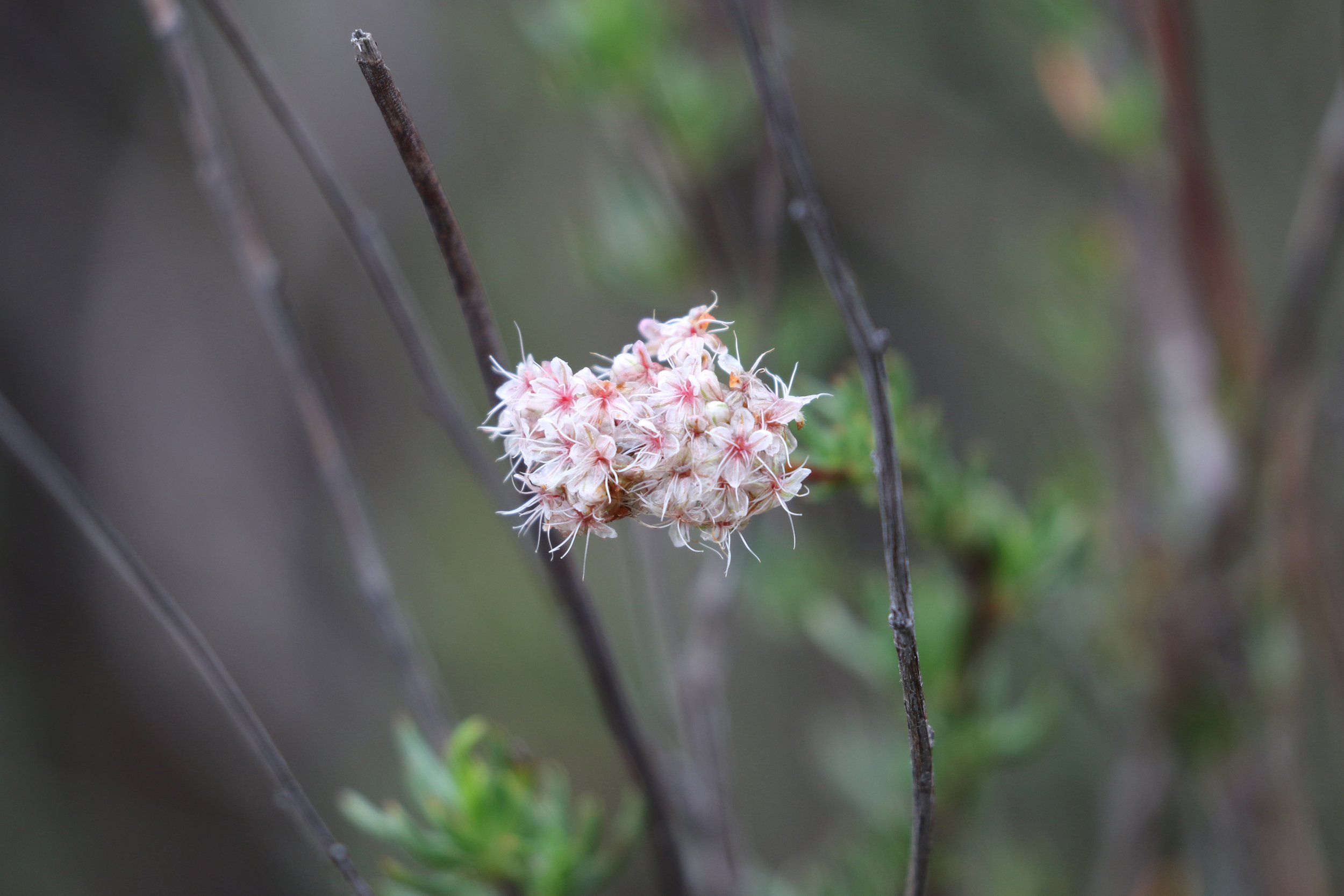
California Buckwheat (eriogonum fasciculatum)
With such an array of beautiful and unique plant life, it’s no wonder more and more people are opting to replace their lawns with California native gardens. The state of California is a biodiversity hotspot, with 61% of its plant life found nowhere else in the world. (1) There are many benefits to rewilding our gardens with California native plants. They can reduce our environmental footprint by using less water and creating habitats for local insects and animals, enriching the biodiversity of our local neighborhoods. We also have the pleasure of experiencing the emotional and mental health benefits that result from nurturing this environment and joyfully watching wildlife thrive amongst the beautiful wildflower blooms.

Coulter's Matilija Poppy (Romneya coulteri)
As a Certified California Naturalist, Sarah enjoys expanding her knowledge of Californian native flora and fauna. She recently completed the California Native Plant Landscaper Certificate Program offered by the Theodore Payne Foundation. Developed in partnership with The California Native Plant Society, LADWP, and The US Green Building Council, Los Angeles, this course covers the steps involved in planting and maintaining a California native landscape, such as identifying soil type, choosing plant communities, irrigation, and pruning.

Palmer's Indian Mallow (Abutilon palmeri)
The Theodore Payne Foundation's best practices suggest developing a California native garden as a 4-year process. Although at first, a California native garden will likely require the same amount of water (or possibly more) than a lawn, a California native garden is a long-term investment towards drought tolerance and increasing local biodiversity.

Yerba Santa (Genus Eriodictyon)
Year one involves the initial steps of creating a plant list, mulching, evaluating the runoff potential of a site, sowing wildflowers, and staking young plants. Year two is more about maintaining the garden by raking, pruning, watering, re-mulching, sowing wildflower seeds, weeding, and removing struggling plants. Year three involves seasonal maintenance such as watering, pruning overgrown plants, weeding, and replanting. And year four involves pruning with long-term shaping in mind, weeding, replanting, and watering.
An important course component involves identifying what plants best suit the site based on soil qualities and plant communities. There are generally three soil types, sandy, loamy, and clay which vary in their infiltration rate, water-holding capacity, nutrient-holding capacity, and aeration. Plant communities are groups of plants that typically grow together in natural environments.
California Native gardens usually derive from the following plant communities:

Woolly Bluecurls (Trichostema lanatum)
Coastal Sage Scrub are plants that tend to grow low to the ground; they include many aromatic plants such as Artemisia, Buckwheat, Salvias, and Matilija Poppy as well as Deerweed.

Miner’s Lettuce (Claytonia perfoliata)
Chaparral is thick, dense growth that contains a lot of diversity and tends to burn easily. This group includes Chamise, Scrub Oak, Buckwheat, Matilija Poppy, and Toyon.
Desert is a very diverse community of plants that exist at various elevations, such as Cacti, Joshua trees, Agave, Abutilon-Palmeri (Mallow), and Saltbush.

Cholla Cactus (Genus Clindropuntia)
Riparian is a diverse community of plant species that usually exist streamside, creating vital habitat for California wildlife; this group includes plants such as Jancus, Carex, and Ferns.

California Buckeye (Aesculus californica)
Pruning is commonplace in any garden to shape and control the size of plants, stimulate growth, and improve overall plant health. Folks have very different opinions about pruning a California native garden; some believe the landscape should grow wild and natural, while others regularly prune to control shape and growth.
Tip pinching is often performed in California native gardens; this involves pinching new growth off the tips of certain plants or right after flowering to stimulate fuller growth. For example, Ceanothus is a plant that benefits from tip pinching after flowering.

Bladderpod (Peritoma arborea)
Deadheading is the practice of removing dead flowers from plants before they go to seed, this can improve the appearance of plants and prolong the flowering season for some. Deadheading is sometimes discouraged in California native gardens as birds like to feed on seeds. Allowing plants to go to seed creates a natural food source, plus we get the pleasure of watching wildlife interact with the native plants in our yard. Toyon is an excellent example of this; its flowers bring berries which become food for Robins, Waxwings, Thrushes, and other visiting birds.

California Poppy (Eschscholzia californica)
Embracing a California native garden is a rewarding transformation with many benefits, including eventual drought tolerance, reduced maintenance, and the generation of natural habitat that increases the biodiversity in our neighborhoods. There is also the added benefit of joy we experience through the mindful activity of watching birds, insects, and animals live and thrive in the ecosystem that we have created within our yards.

Works Cited
(1) “Explore the Biodiversity Hotspots.” CEPF, https://www.cepf.net/our-work/biodiversity-hotspots.
(2) Theodore Payne Foundation. “California Native Plant Landscaper Certification.”
Sarah Barnard is a WELL and LEED accredited designer and creator of environments that support mental, physical and emotional wellbeing. She creates highly personalized, restorative spaces that are deeply connected to art and the preservation of the environment. An advocate for consciousness, inclusivity, and compassion in the creative process, Sarah has appeared in Architectural Digest, Elle Décor, Vogue, HGTV and many other publications. In 2017 Sarah was recognized as a "Ones to Watch" Scholar by the American Society of Interior Designers (ASID).
LA Textile: Organic, Sustainable and Recycled Fiber Fabrics

The Kale Tree design team had a great time visiting LA Textile at the California Market Center. We set out to meet the best new designers, manufacturers, mills, and printers in the heart of downtown Los Angeles and are excited about the new friends and connections we've made.

Organic textiles were at the top of our sourcing list. We're happy to report that there were an increasing number of suppliers with organic fabrics in varying weights and colors on the showroom floor. While natural and organic textiles were displayed from across the globe, we found a strong presence of Japanese mills with elegant certified organic cotton twills, batiste, canvas, and satin weaves.

We also connected with the folks at Cotton Incorporated and had an interesting chat about U.S. Cotton and the importance of traceability and transparency in cotton fiber textiles.

Recycled fiber textiles are another fabric we are especially interested in designing in our studio. While luxury-level recycled fiber textiles are still somewhat in limited offerings, we were pleased to connect with mills offering recycled polyesters, textiles made from recycled water bottles, and Seaqual fabrics made from recycled ocean plastics. We love to see mills working with recycled fiber yarns and especially support efforts to remove plastics from the ocean.

Custom-printed textiles are at the heart of what we do. We love fabric, and we find it incredibly rewarding to see our nature-inspired illustrations realized as drapery, bedding, pillows, and a host of other home decor items. At the LA Textile event, we were delighted to connect with like-minded folk who care about sustainability and wellness in design, sourcing, and production methods.

The Kale Tree design team is working on a new organic textile collection for 2023 featuring California native flora and fauna. Inspired by the local wildlife of our Southern California mountains, deserts, woodlands, and beaches, we look forward to sharing more with you soon!
Mule Deer of the Verdugo Woodlands

A California mule deer (Odocoileus hemionus californicus) and fawn.
Humans and deer have lived alongside each other for a long time. In the past, this relationship has been mutually beneficial. Native Californians would routinely carry out small controlled burns to clear underbrush and prepare pastures, which created fresh new growth that deer love to eat. In 1907, the first law to protect deer was introduced in response to the increased interaction between deer and California’s growing population. Laws protecting natural predators such as bears, mountain lions, and wolves took a long time to follow (the endangered species act did not protect bears until 1970), a factor that allowed deer numbers to increase.

A California mule deer (Odocoileus hemionus californicus) grazing on Purisma island mallow ( Malva purisima).
Over time, the number of deer that reside in the Wildland Urban Interface (WUI), “the zone of transition between unoccupied land and human development,”(1) and some residential environments has increased. This is perhaps the result of a combination of factors such as; a reduced number of natural predators, the increasing population that lives in or near the WUI, and increased availability of food in well-irrigated environments such as gardens.

Palmer's Indian Mallow (Abutilon palmeri)
As a result, deer have increasingly adapted to live in urbanized environments, and a common issue that arises from living alongside deer is damage to trees and gardens. Deer love to graze on fresh shoots and leafy green plants, which can stunt the growth of young trees and disrupt fruit production. Plants that deer find “highly palatable,” such as roses, apple trees, and members of the Malvaceae family, such as mallow, hibiscus, and abutilon, are also commonly found in domestic gardens.

Cajun hibiscus (Hibiscus rosa-sinensis)
The Verdugo mountains are a beautiful and unique example of the Wildland Urban Interface within Los Angeles. This small mountain range is surrounded by urban development, leaving an isolated pocket of nature within the city. “You have what is almost like a federally protected forest that has survived human urban growth all around it. It’s like an undiscovered Atlantis.”(2) Some neighborhoods that touch the Verdugo mountains include Glendale, Whiting Woods, Oakmont, La Crescenta Highlands, Pasadena, and Altadena. The people who visit and reside here consider it a privilege to live in this unique area where an almost undisturbed natural environment meets the city.

A California mule deer (Odocoileus hemionus californicus) grazing.
As a Certified California Naturalist, Sarah loves exploring the hiking trails in and around the Verdugo mountains. This area is teeming with wildlife “except for the absence of grizzly bears, the wildlife in the Verdugos is much as it was 200 years ago.”(3) California has six subspecies of mule deer (Odocoileus hemionus), The California mule deer (Odocoileus hemionus californicus) is commonly found in the Verdugos and surrounding areas.

A California mule deer (Odocoileus hemionus californicus) grazing on Purisma island mallow ( Malva purisima).
One way we can live alongside deer and maintain a beautiful garden is by planting deer-resistant plants, many of which also make a beautiful aesthetic or fragrant addition to our garden. While no plant is one hundred percent deer-proof, there are some qualities of certain vegetation that deer tend to avoid.

Golden Currant (Ribes Aureum)
Prickly or furry plants are a good place to start. Some examples include the Fuchsia flowered gooseberry (Ribes speciosum) and the California barberry (Berberis pinnata). The California barberry’s (Berberis pinnata) prickly leaves make it unpleasant to eat, but it also has beautiful yellow flowers, making it an appealing garden plant. The Fuchsia flowered gooseberry (Ribes speciosum) has gorgeous bright red dangling flowers that also attract hummingbirds to your garden.

Cleveland sage (Salvia clevelandii)
Deer also tend to avoid aromatic plants such as Sages (Salvia sp), Cleveland sage (Salvia clevelandii), and Hummingbird sage (Salvia spathacea) have a beautiful smell that deers dislike.
Tough and leathery plants can be hard for deer to chew. The California bush anemone (Carpenteria californica), a shrub with beautiful white flowers, and the Big berry manzanita (Arctostaphylos glauca) have tough trunks. Ground cover such as Emerald Carpet (A. uva-ursi X nummularia) is a leathery plant that grows densely on the ground, which can also reduce weeds.

California Poppies (Eschscholzia californica)
Fast-growing plants such as the California wild grape (Vitis californica) are a good option, as their rapid rate of growth allows them to recover from being grazed on as they grow out of reach from the deer. Spring wildflowers are also a good option as there are so many of them; even if a few are eaten in amongst all the new growth of the season, plenty still survive to make a beautiful garden.

A California mule deer (Odocoileus hemionus californicus) grazing.
If all else fails, a deer repellent spray can be applied to the plants in your garden. This non-toxic spray (which won’t hurt the deer or the plant) leaves a bad taste in their mouth, which is intended to slow grazing. There is a variety of homemade and store-bought options available.

An Oak Titmouse (Baeolophus inornatus) resting on a water dish.
Taking all of this into account, the remaining wildlife on Earth is a fraction of what it once was, “Extinctions have been a natural part of the planet’s evolutionary history. 99% of the four billion species that have evolved on Earth are now gone.”(4) We treasure day-to-day encounters with the wildlife that remain. Living amongst wildlife in the Wildland Urban Interface is a unique privilege; taking a break from the city and enjoying a hike in this pocket of nature is a wonderful gift. Being mindful of the wildlife in the Verdugo mountains can take the form of gently suggesting not to eat the plants in your garden (through plant choice or other options) or leaving a bowl of water out on hot summer days . This is a rewarding part of the experience of living and visiting here; in return, we get to live alongside these magical animals and watch them thrive.

A California mule deer (Odocoileus hemionus californicus) grazing.
Bibliography
“What Is the Wui?” U.S. Fire Administration, 8 June 2022, https://www.usfa.fema.gov/wui/what-is-the-wui.html.
“A Hidden Mountain Treasure in the City.” Los Angeles Times, Los Angeles Times, 19 May 1998, https://www.latimes.com/archives/la-xpm-1998-may-19-mn-51296-story.html.
“A Hidden Mountain Treasure in the City.” Los Angeles Times, Los Angeles Times, 19 May 1998, https://www.latimes.com/archives/la-xpm-1998-may-19-mn-51296-story.html.
Ritchie, Hannah, et al. “Extinctions.” Our World in Data, 15 Apr. 2021, https://ourworldindata.org/extinctions.
Other Resources
“Mule Deer (Odocoileus Hemionus).” CDFW, https://wildlife.ca.gov/Regions/6/Deer/Natural-History.
Kubey, Elizabeth. “Deer Resistant Native Plants.” California Native Plant Society, 4 Apr. 2018, https://www.cnps.org/gardening/deer-resistant-native-plants-5588.
Sarah Barnard, WELL AP + LEED AP, is a leading designer of personalized, sustainable spaces that support mental, physical, and emotional wellbeing. She creates highly personalized, restorative spaces that are deeply connected to art and the preservation of the environment. An advocate for consciousness, inclusivity, and compassion in the creative process, Sarah has appeared in Architectural Digest, Elle Décor, Vogue, HGTV, and many other publications. In 2017 Sarah was honored as a “Ones to Watch” Scholar by the American Society of Interior Designers (ASID).

Birdwatching as mindfulness: Creative connections within the bird watching community.

The benefits of looking at nature are everywhere, no matter where you live. Outdoor recreational activities such as hiking and being in nature promote feelings of well-being. Recent research by academics at the University of Exeter, the British Trust for Ornithology, and the University of Queensland suggests that birding, in particular, has mental health benefits. Researchers in the UK recently determined that people who saw more birds in their daily lives experience less stress and depression. Bird-watching is a practice that encourages mindfulness and patience. Simply watching a bird feeder can be beneficial for your mental health.
Birding also benefits your mental health through the community and friendships that it creates. A love of birding connects people from all walks of life and is what initially drew interior designer Sarah Barnard, WELL AP + LEED AP, to the artwork of Vivienne Edwards.
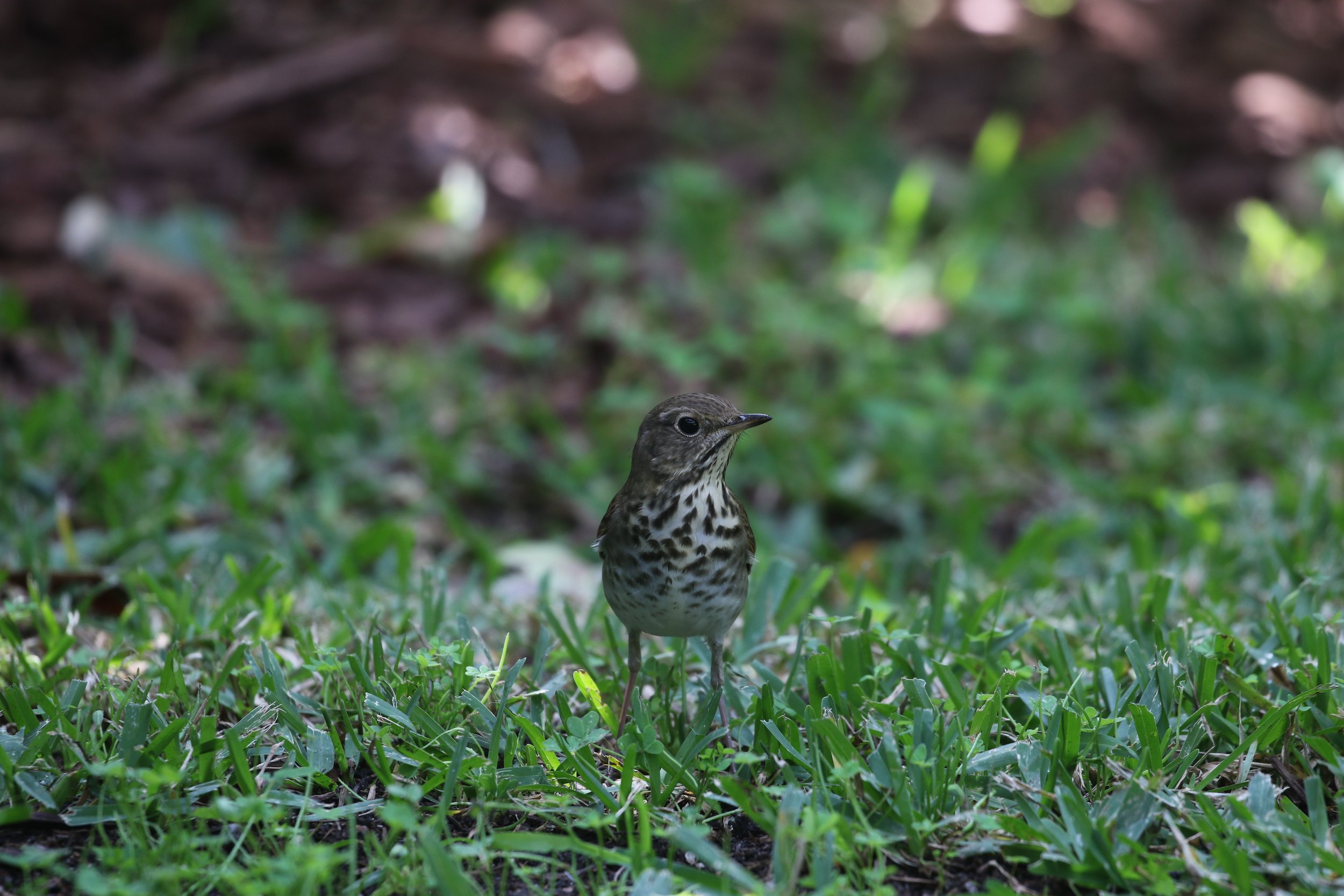
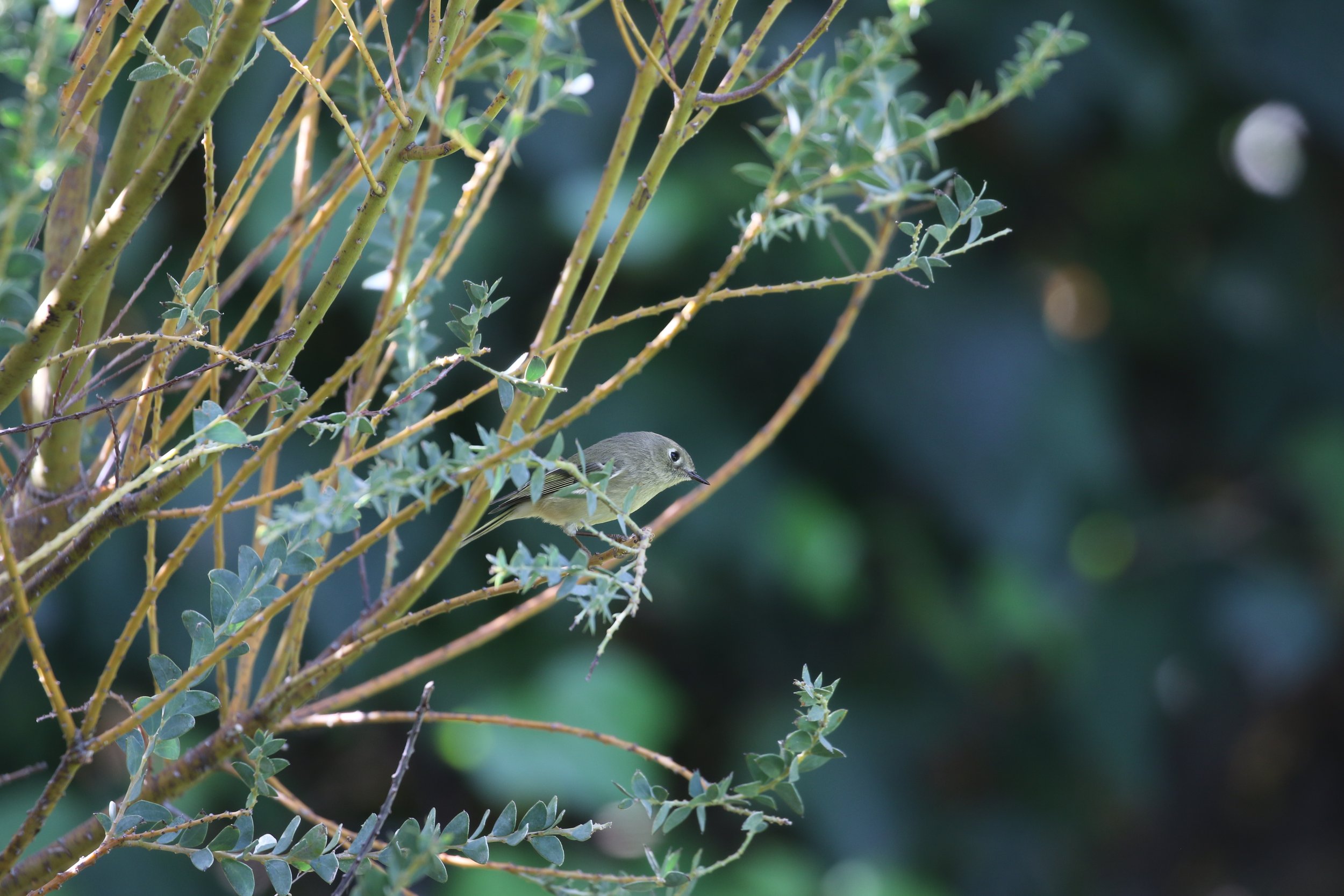
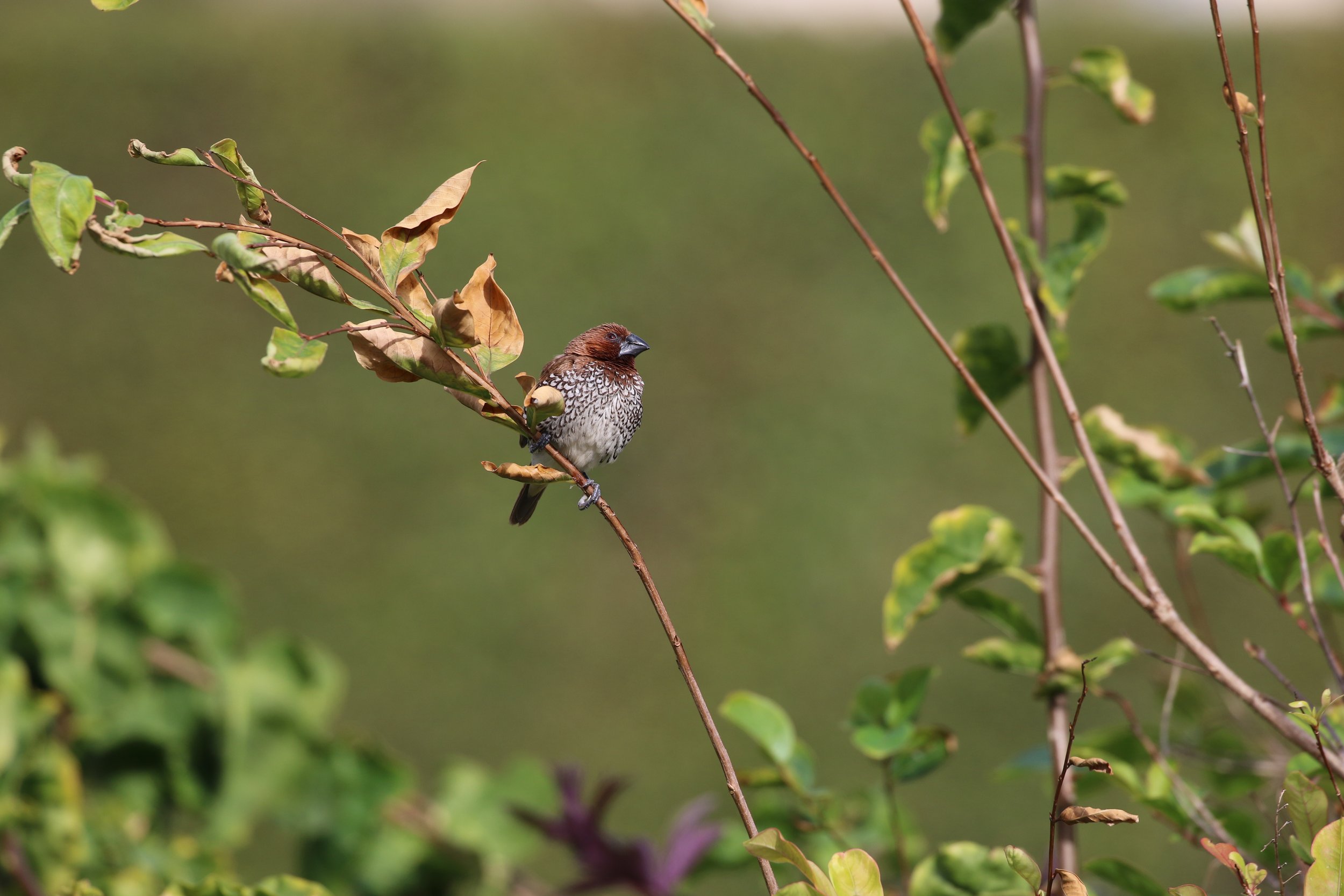
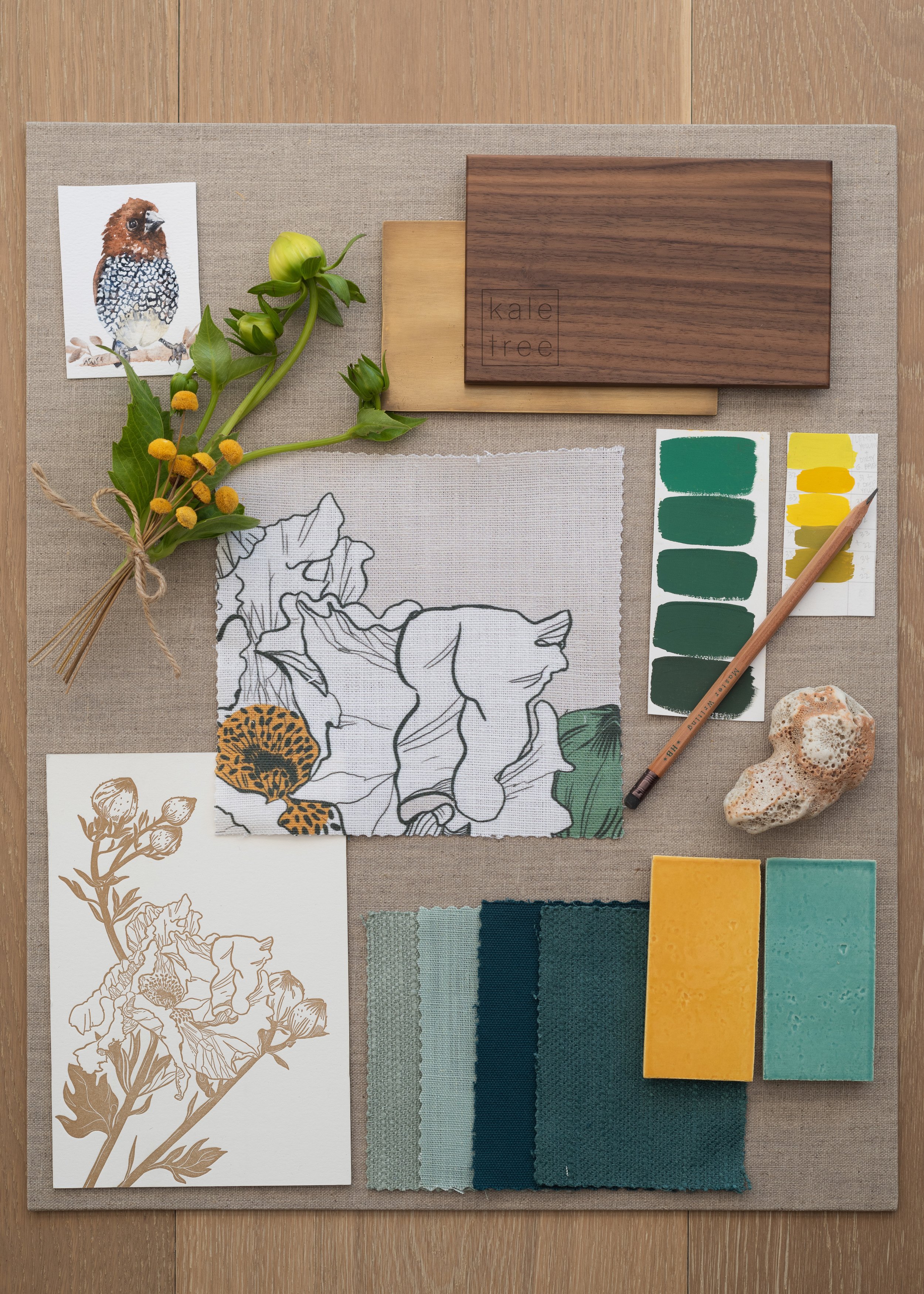
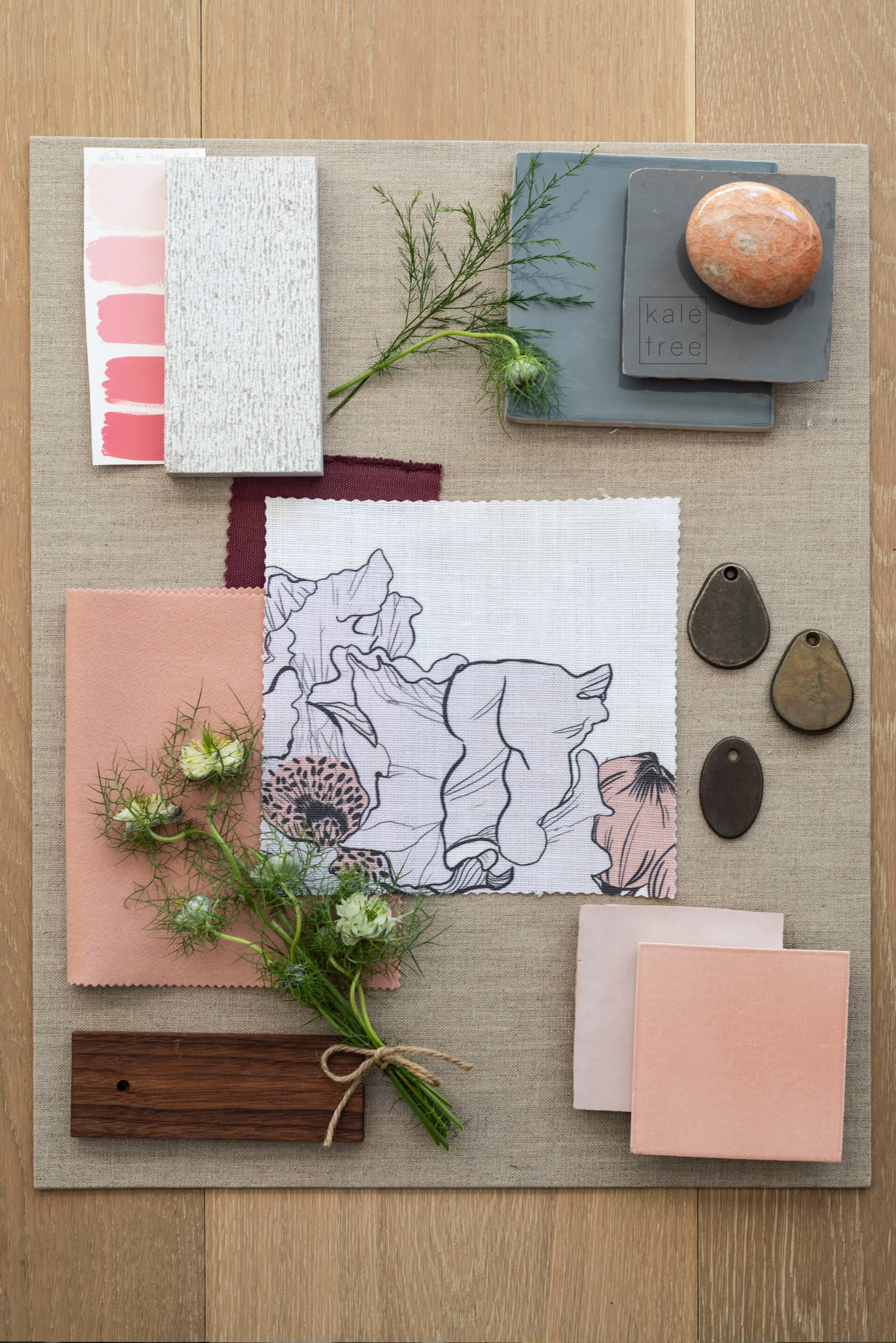
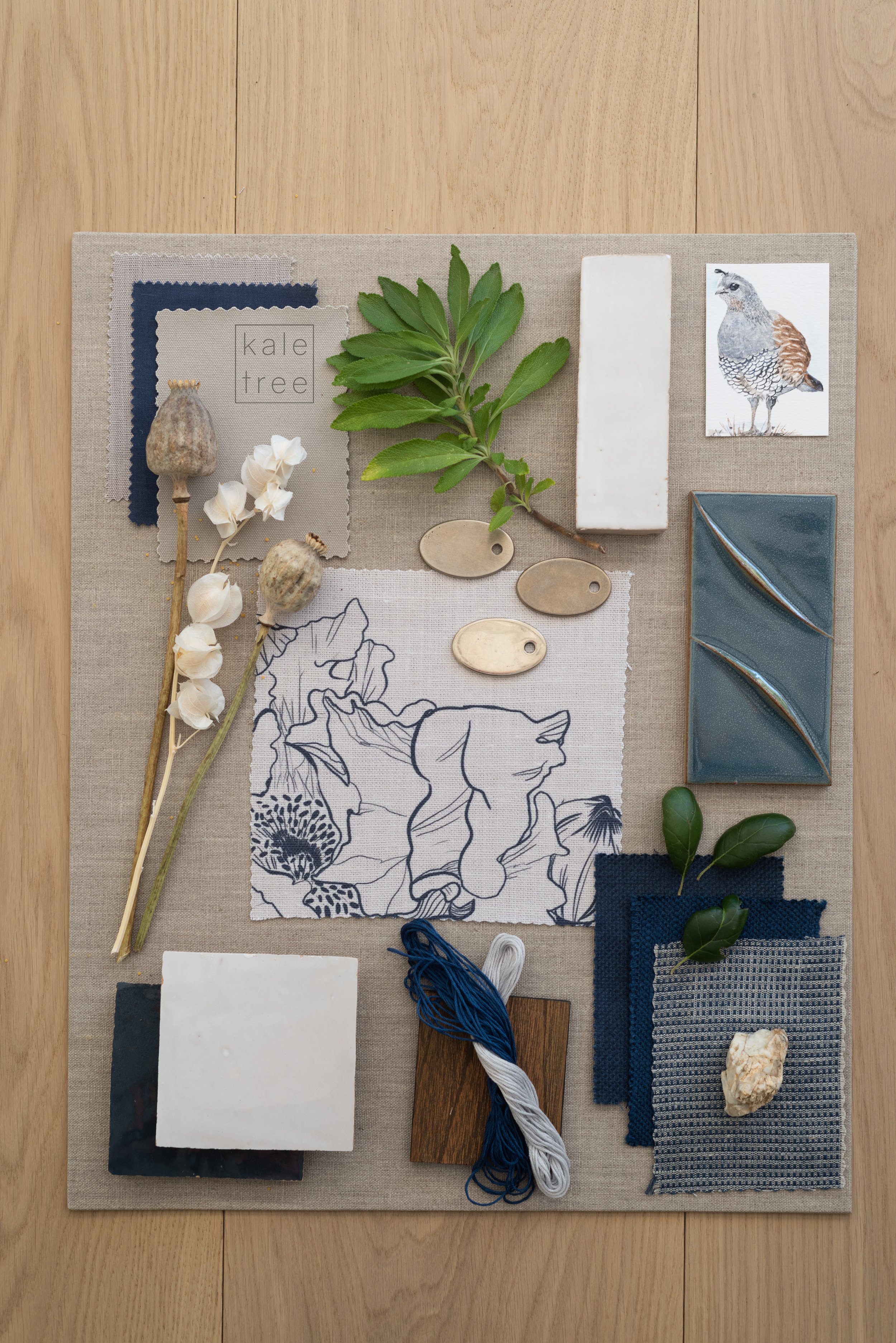
The watercolor paintings of small birds included in several of our mood boards for the Matilija Poppy Textile and the Mallow Textile are by the artist Vivienne Edwards. Vivienne is based in South Africa and makes small watercolors of birds that she encounters in the natural environment around her. Sarah discovered Viviennes' work one day by chance, drawn to the intimacy of their small size (2.5 x 3.5 in) and how they reflect the artist's relationship with her natural surroundings.
Sarah is an avid birder and felt that Vivienne's paintings would be a special addition to her art collection. Sarah commissioned a small set of paintings from Vivienne based on photographs Sarah took of favorite birds in her garden.
These magical birds are featured in a series of Kale Tree mood boards, whose nature-inspired luxury eco fabrics incorporate biophilic prints inspired by the intersection of art, design, and nature. Sarah thought these paintings contributed to the overall feeling of these mood boards, which feature a series of natural materials and textures that help visualize the collection of objects that make up an interior space.
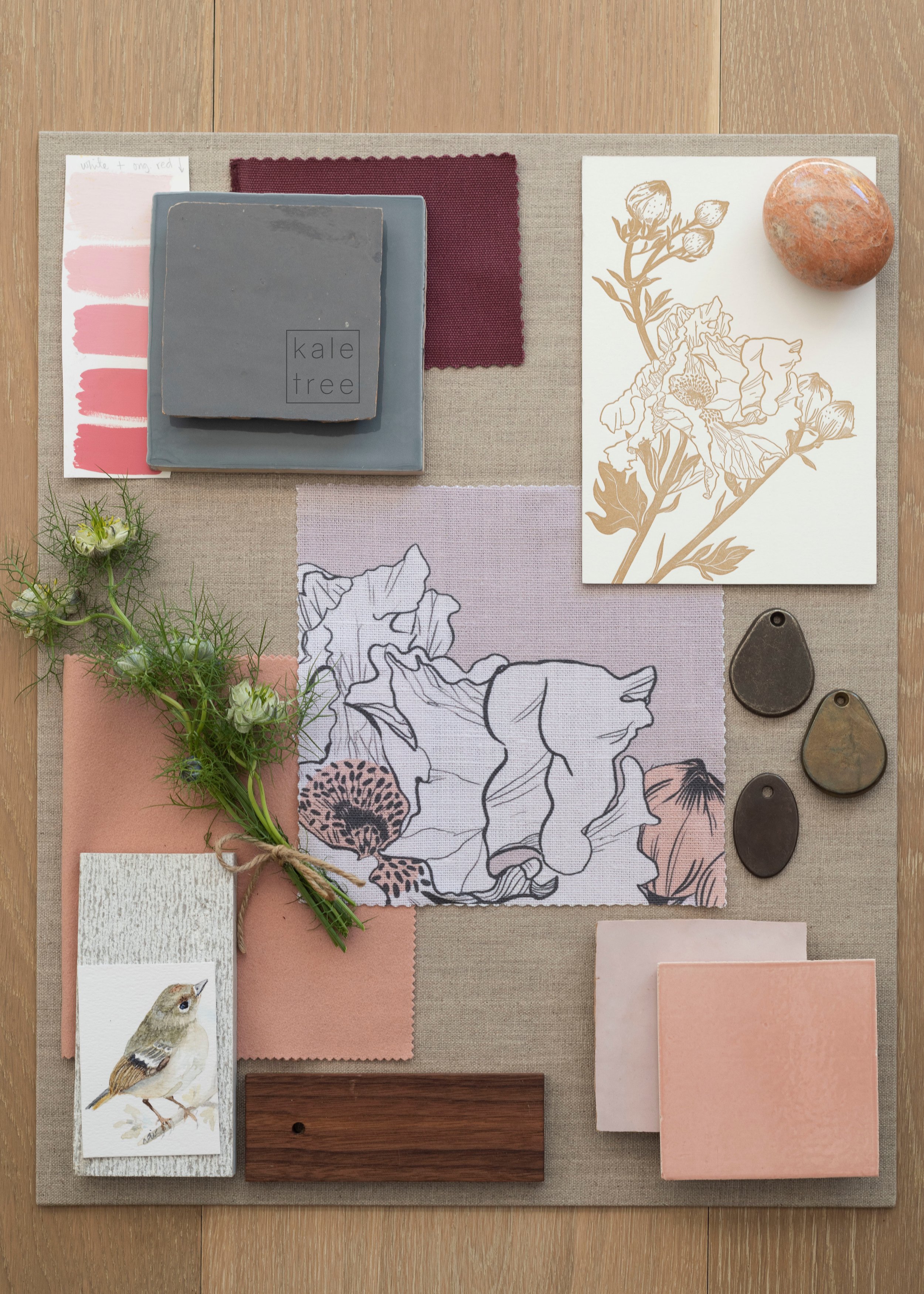
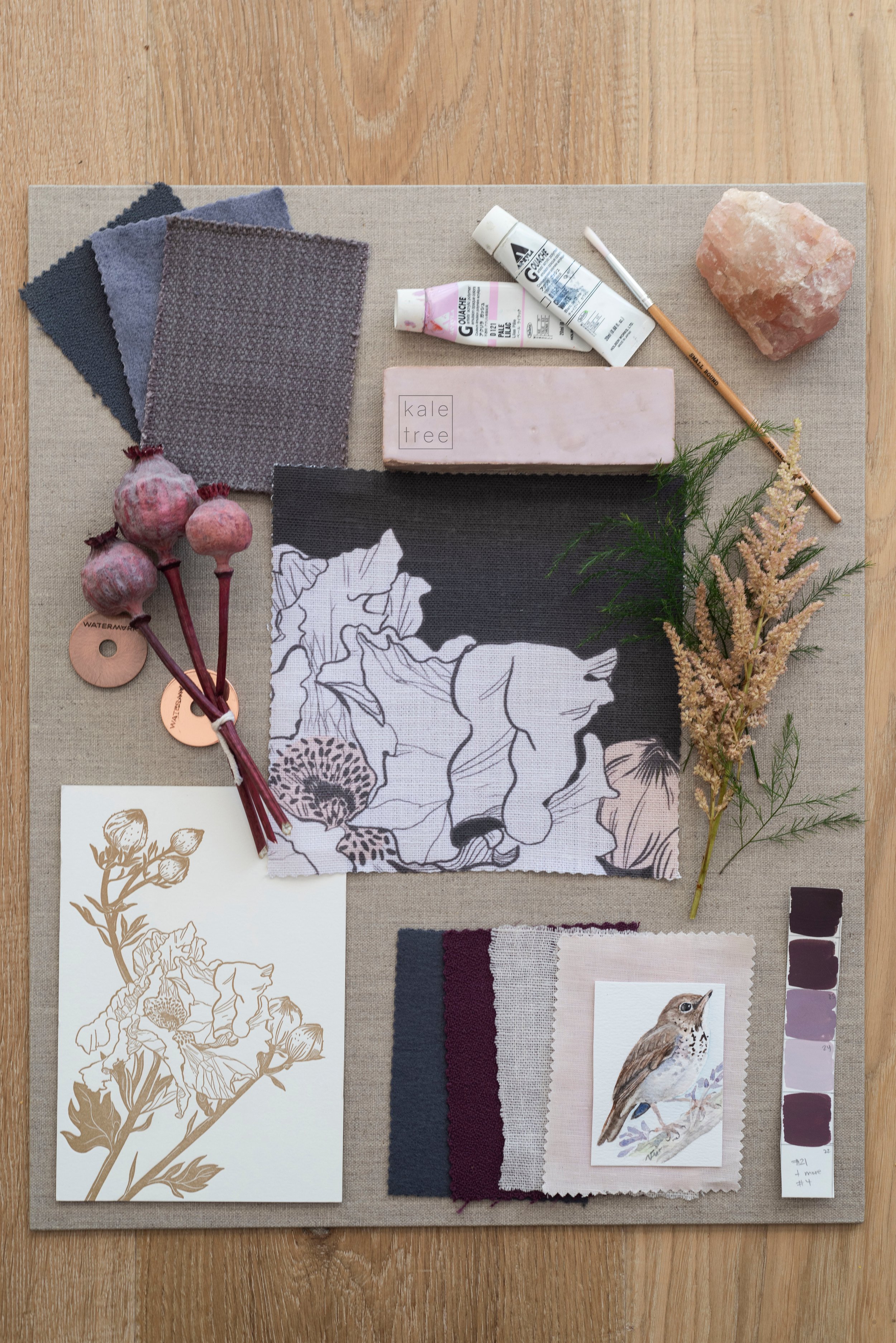
The bird featured in this Kale Tree mood board for the Matilija Poppy Textile in Putty is a Ruby-crowned Kinglet (Regulus calendula); this is a tiny, very cautious bird that can be quite timid. Sarah has mainly spotted the Ruby-crowned Kinglet in the Acacia cultriformis tree in her garden, which it uses as a safe passage to the water bowl. It is a fairly solitary bird that does not stay out in the open for too long. Its ruby crown is very subtle, making it difficult for her to identify at first, and she was very happy when she did. The hand-drawn pattern of this floral textile is inspired by Matilija Poppies (Romneya coulteri), a favorite California native flower.

The Hermit Thrush (Catharus guttatus), is a bird with which Sarah feels a real fascination and kinship. Of all the songbirds, the Hermit Thrush is considered to have one of the most beautiful songs. The first time Sarah saw a Hermit Thrush, she was overcome and entranced by the beauty of this bird which felt like it had a magic quality. The Hermit Thrush is quite solitary; it moves along the edges of the garden with cautious stealth, so it feels like a special moment when it is spotted. Hermit Thrushes seldom visit backyards making this sighting and painting all the more special, a beautiful and meaningful addition to the Matilija Poppy Textile (Midnight) mood board from Kale Tree.
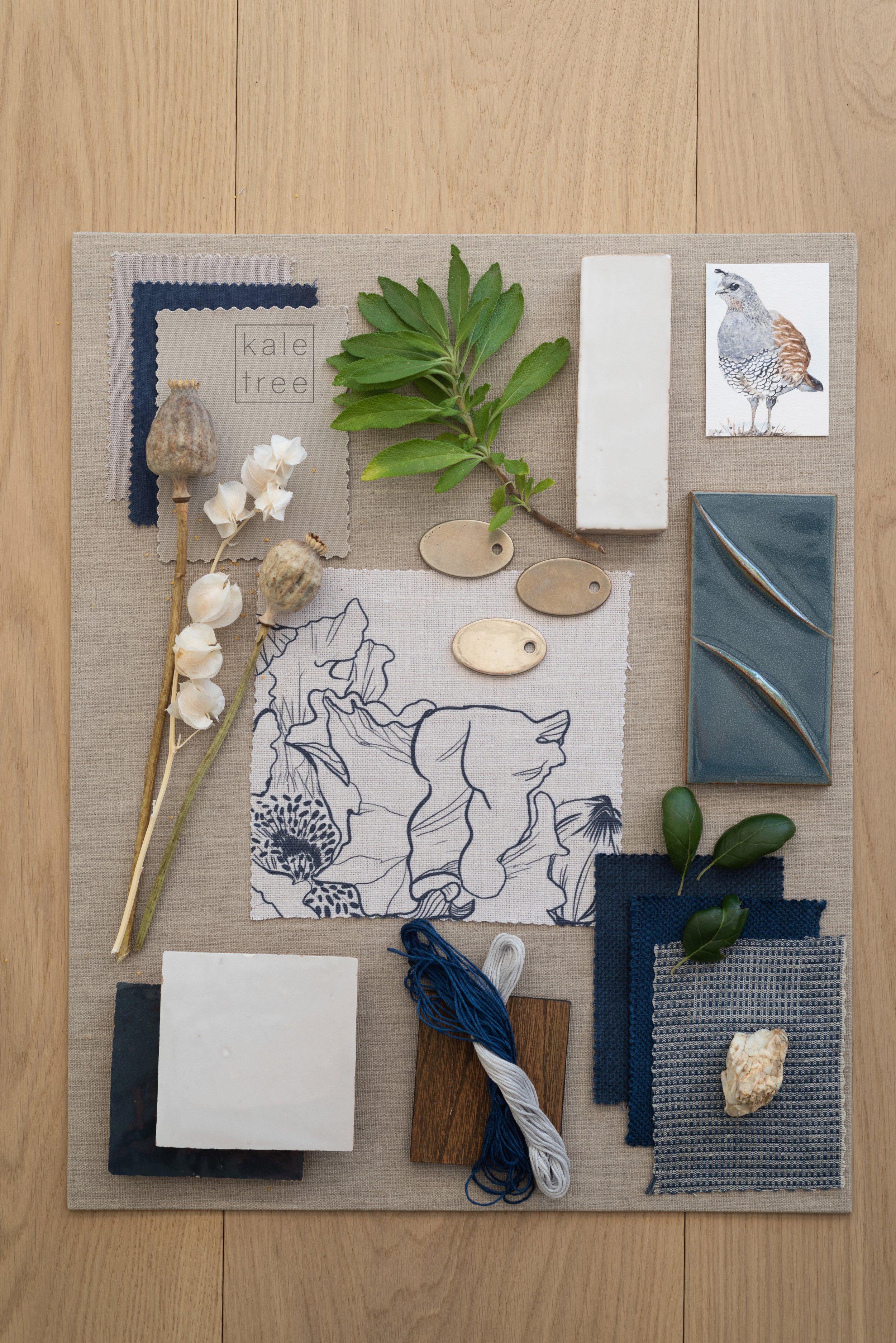
The mood board for the Matilija Poppy Textile (Bluestone) features a painting of the California Quail (Callipepla californica), the California state bird. This bird has beautiful feather patterns and enchanting qualities similar to the hermit thrush. Sarah had only ever seen California Quails in the desert until she moved to her new house, where she saw a pair walk across her patio one day. This experience was delightful and magical as it possibly meant they were nesting nearby. Sarah intends to plant a quail bush (Atriplex lentiformis) in her garden to encourage the birds to stay a while.

The painting featured in the mood board for the Matilija Poppy Textile (Natural) is of a Scaly Breasted Munia (Lonchura punctulata). You can usually find this small songbird in grasslands, gardens, and fields; the scaly spots on its underbelly and the color palette of its feathers compliment the stamens in the center of this poppy textile. Sarah first saw this bird in her garden and had never seen a bird like it before. She was surprised to learn that it was an introduced species from South East Asia. On watching this bird, she was struck by how familial and social they are; they are hardly ever seen alone and are often spotted sharing food and space. The Scaly Breasted Munia is also a lot less timid around humans, usually happy to sit and listen to a little bit of a human-to-bird conversation.

A painting of a Bewick's Wren (Thryomanes bewickii) is paired alongside a series of natural materials in the mood board for the Mallow Textile (Evening Mauve). The Bewick's Wren was originally one of Sarahs' favorite birds and has been in Sarahs' life for a long time. At her last house, a mother Bewick's Wren, taught her babies to eat suet cake from her bird feeder. The mother wren would also leave baby birds in a bush in Sarahs' garden while they went to forage, allowing her to spend some time with these usually solitary birds. Although they are usually found in dry bushy areas, the Bewick's Wren is also at home in gardens and parks in suburbs and cities. Its ability to live in natural and built environments creates a lovely allegory reflecting the design philosophy behind this floral fabric.
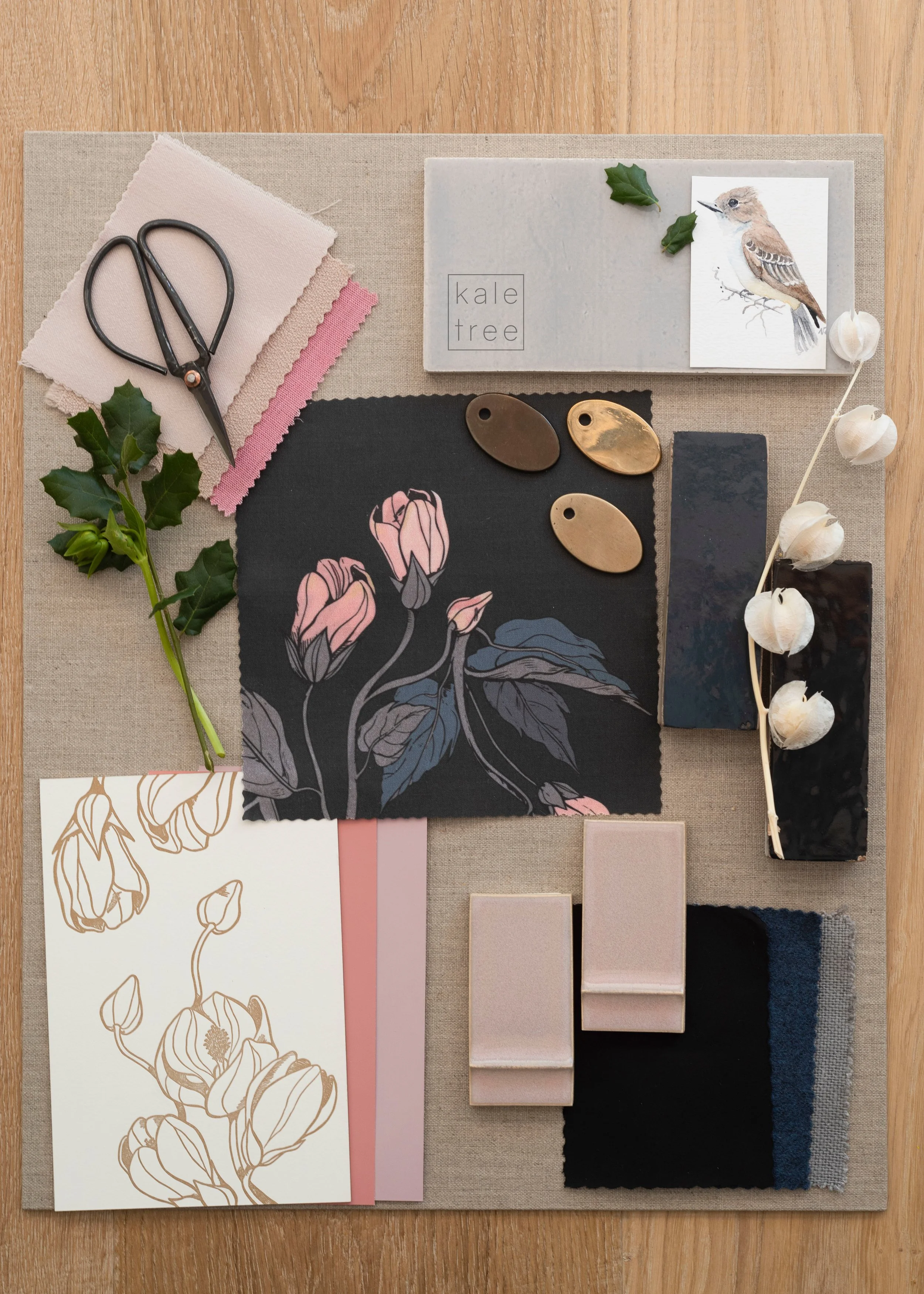
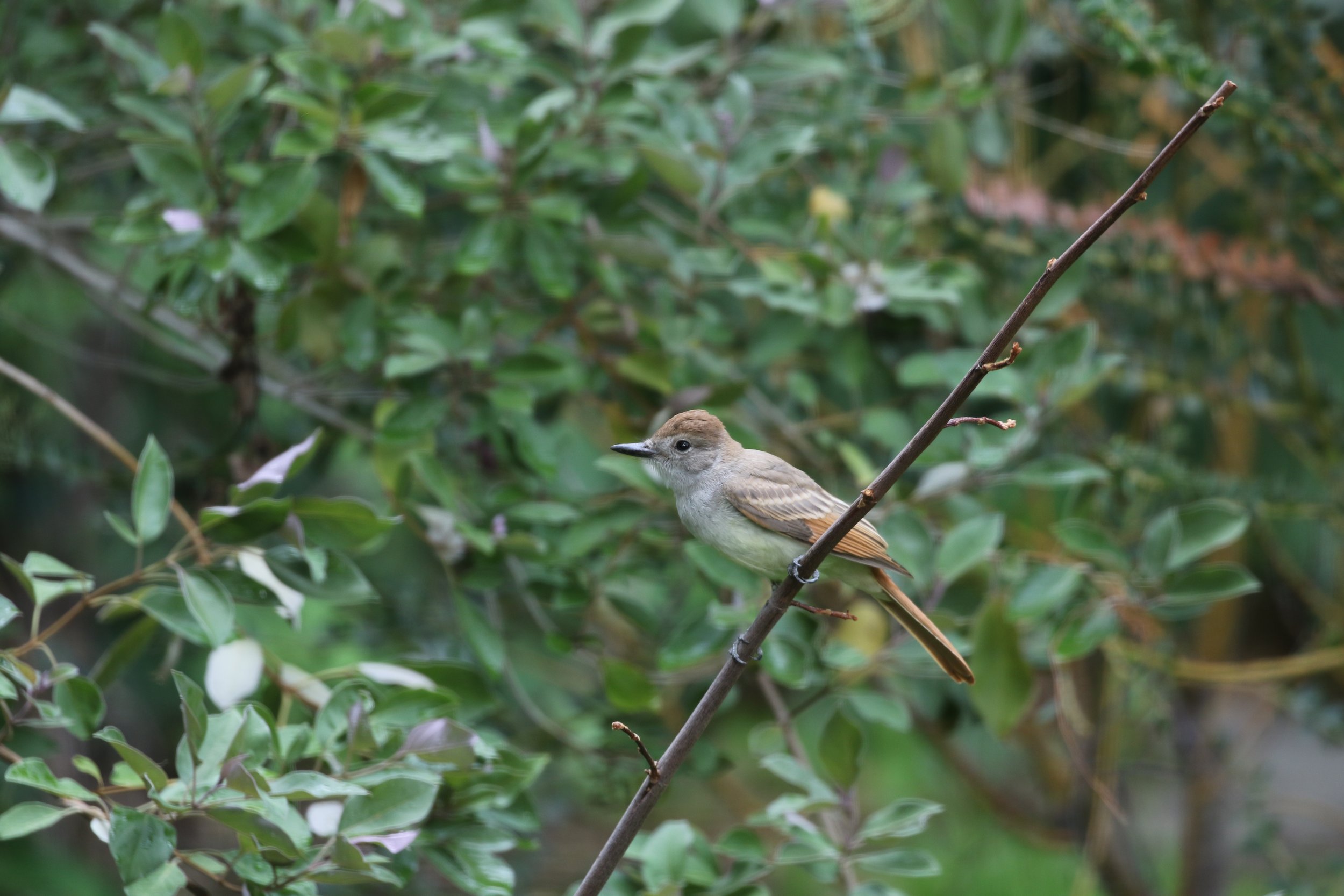
In this last mood board, a painting of an Ash-throated Flycatcher (Myiarchus cinerascens) accompanies a swatch of the Mallow Textile (Midnight Forest). These birds are often found in dry places, and as a result, they don't need to drink much water. Instead, they get the water they need from their food. Sarah often sees these birds in her garden, but explains that patience is required as they are usually on a perch somewhere, sitting, waiting, and surveying for insects that they catch in mid-flight.
Vivienne Edwards is a self-taught artist from South Africa who loves to work with the unpredictability of watercolors. She is fortunate to live in a wildlife-rich region with abundant bird life and wetlands. Her work takes inspiration from the small creatures in the natural environment around her, going about their daily lives with such purpose and energy. It is often a show of vulnerability from this wildlife that prompts what she decides to paint, such as a Sparrow delicately picking a sprig of parsley for its young.
Sarah and her team love working with other artists, especially those who celebrate the beauty of nature and inspire joy through their work.

Bibliography
“Beautiful Birding: 7 Mental Health Benefits of Bird Watching.” Happiness.com, 27 Jan. 2022, https://www.happiness.com/magazine/art-culture-leisure/mental-health-benefits-of-bird-watching/.
Leahy, Christopher W. “Teaching Your Mind to Fly: The Psychological Benefits of Birdwatching.” Princeton University, The Trustees of Princeton University, 31 July 2021, https://press.princeton.edu/ideas/teaching-your-mind-to-fly-the-psychological-benefits-of-birdwatching.
Ray, Heather. “A Dose of Nature: Why Birding Will Boost Your Mental Health.” Birds and Blooms, Birds and Blooms, 27 Apr. 2022, https://www.birdsandblooms.com/birding/birding-basics/birding-health/#:~:text=Researchers%20in%20Kentucky%20found%20that,beneficial%20to%20your%20psychological%20health.
Sarah Barnard is a WELL and LEED accredited designer and creator of environments that support mental, physical and emotional wellbeing. She creates highly personalized, restorative spaces that are deeply connected to art and the preservation of the environment. An advocate for consciousness, inclusivity, and compassion in the creative process, Sarah has appeared in Architectural Digest, Elle Décor, Vogue, HGTV and many other publications. In 2017 Sarah was recognized as a "Ones to Watch" Scholar by the American Society of Interior Designers (ASID).
Kale Tree Supports Sierra Club’s Campaign to Protect California’s Forests

Yucca, Pine trees, Cyprus trees, and grasses. Angeles National Forest, California.
California's forests are abundant with natural wonders to explore. According to the US Department of Agriculture, forest land makes up one-third of California's total land area. California's forests host millions of residents and visitors enjoying our state's natural beauty while participating in endless recreational and educational activities such as hiking, camping, and birdwatching.

Red-shouldered Hawk (Bueto lineatus) located in Three Rivers, Southern Sierra Nevada, California.
While spending time outdoors is a valuable experience that enriches our quality of life, California's lush forests also provide vital services to a healthy ecosystem, including plant and wildlife biodiversity, flood and erosion control, and climate regulation. In addition, a healthy forest contributes to healthy air quality and reduces the impacts of climate change by absorbing Carbon Dioxide from the atmosphere.

Three Rivers, Southern Sierra Nevada, California.
California's forests are also a source of reliable, clean drinking water for our state's communities. By supplying and regulating water through meadows and watersheds year-round, our forests provide 65 percent of the state's clean water. Consequently, in drought-prone California, our water supply is dependent on our forest's health and function.

The sunset sky in Three Rivers, Southern Sierra Nevada, California.
As our climate continues to change and wildfires become a more common occurrence in California, there are several challenges that we must face in maintaining the health of our state's forests. A significant threat to the health of California's forests is an extreme logging method known as "clearcutting." Clearcutting involves cutting down natural forests and pouring herbicides on the site to make room for human-made tree plantations. These tree plantations do not replicate the ecosystems of a healthy forest and therefore pose a danger to California's biodiversity, air purity, water supply, and climate regulation.
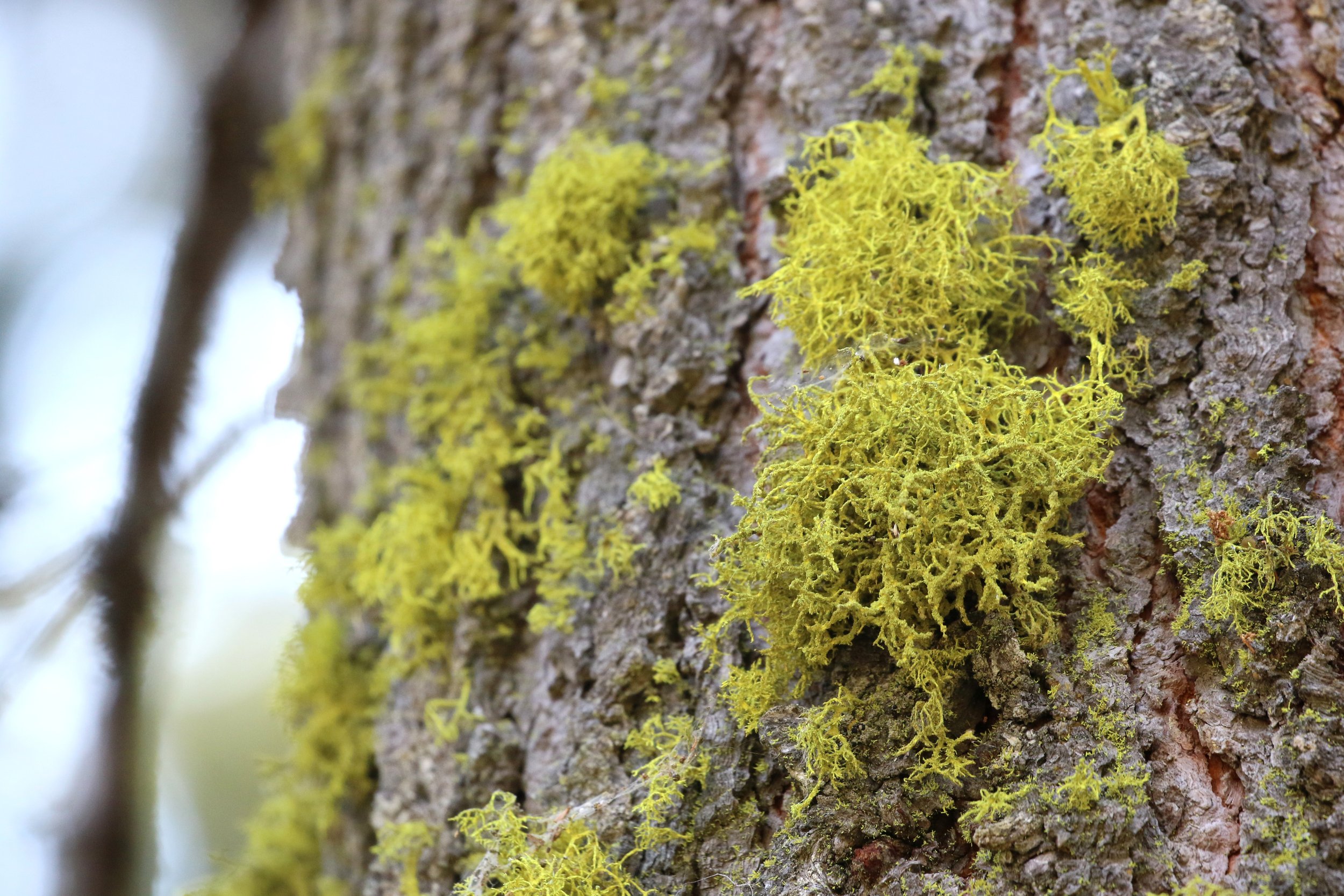
Wolf Lichens (Genus Letharia) located in the Sequoia National Forest, California.
The protection of California's forests is essential to our livelihoods. Unfortunately, more than 50,000 acres of Californian forest are cut down every year due to clearcutting. Sierra Club's "Stop Clearcutting CA" campaign is raising awareness of the dangers of clearcutting and its adverse impacts on California's ecological wellbeing.

Chaparral Yucca (Hesperoyucca whipplei) located in Southern Sierra Nevada, California.
As a naturalist and advocate for environmentally compassionate design, Kale Tree Founder Sarah Barnard LEED AP, and WELL AP, is inspired to support Sierra Club's "Stop Clearcutting CA" mission to protect California's environment. To raise awareness of the urgent need to protect our forests, Barnard will utilize her skills as an artist to contribute photography of flora, fauna, and funga found in California's forests. She will continue to document forests, bodies of water, and wildlife for Sierra Club's campaign throughout the year.

Sparse Pine and Cyprus trees in Angeles National Forest, California.
If you wish to help preserve California's natural forests and support the "Stop Clearcutting CA" campaign, you are invited to sign Sierra Club's petition to Governor Newsom to end clearcutting in California's forests. Visit Sierra Club's website and resource page for more ways you can help protect California's forests and join the group on Facebook, Instagram, and Twitter.

Dried Pine leaves (needles) located in Three Rivers, Southern Sierra Nevada, California.
Bibliography
Balloffet, N; Deal, R; Hines, Sarah; Larry, B; Smith, N. 2012. Ecosystem Services and Climate Change. U.S. Department of Agriculture, Forest Service, Climate Change Resource Center. www.fs.usda.gov/ccrc/topics/ecosystem-services
“Focus on Forestlands in California.” USDA Climate Hubs. www.climatehubs.usda.gov/hubs/california/topic/focus-forestlands-california.
“Nature's Benefits.” Angeles National Forest - about the Forest. www.fs.usda.gov/detail/angeles/about-forest/?cid=fseprd604146.
“Stop Clearcutting CA.” Sierra Club. https://www.sierraclub.org/grassroots-network/stop-clearcutting-ca.

Trail signage at the Red Box Picnic Area in the Angeles National Forest, site of the 2020 Bobcat Fire.